
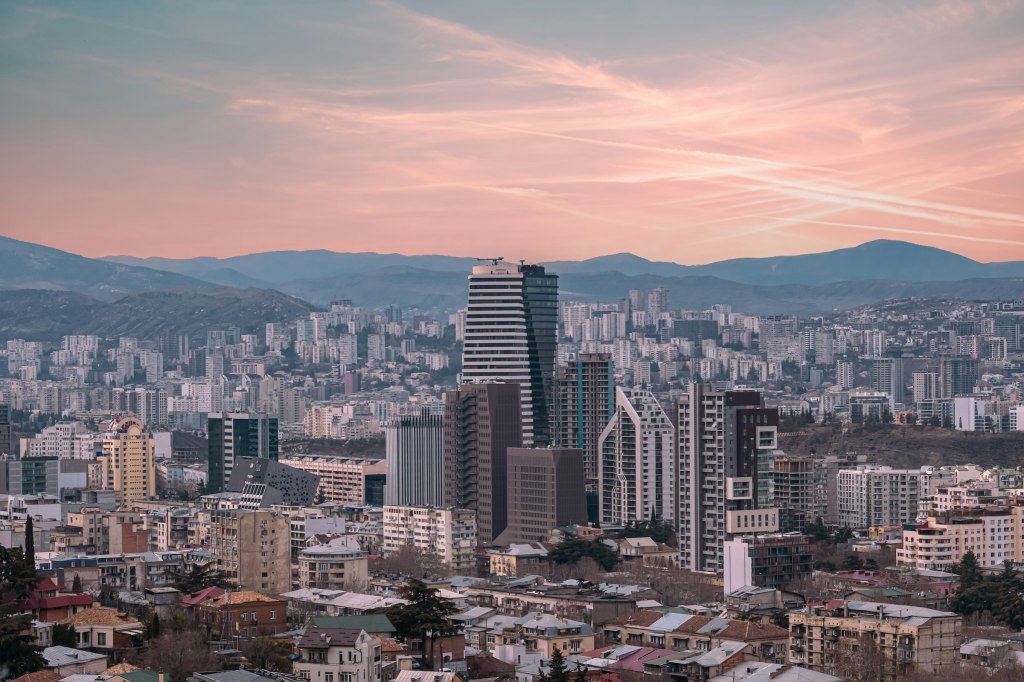
This Tbilisi city guide is a practical, price-aware plan for the capital of Georgia, the Caucasus country where east meets west on a steep, river-cut valley. Expect carved wooden balconies leaning over lanes, domed sulfur bathhouses, church bells, wine poured from clay jars, and a generous table at almost every turn. Below you’ll find where to stay, what to eat, what the sights cost and how to move around, with figures in lari and US dollars.
Prices last updated October 2026. Rates move with season and exchange rates, so treat every figure here as a planning guide and let official sites and venues have the final word. Lari (GEL) amounts are converted at roughly US$1 = 2.60 GEL.
Tbilisi city guide at a glance
- Currency: Georgian lari (GEL, ₾). 10 GEL is about US$3.85.
- Language: Georgian. English is widely understood in hotels, cafés and restaurants, and Russian is spoken by many older residents.
- Plug: Type C and F, 220V.
- Time zone: UTC+4 all year.
- Airport: Shota Rustaveli Tbilisi International, about 17 to 18 km from the center. Bus 337 runs to the city for about US$1, and a taxi to the center is commonly about 20 to 30 GEL ($8 to $11). Ride-hailing apps such as Bolt also operate.
- Best months: late spring (April to June) and autumn (September and October).
When to go
Tbilisi sits in a basin, so seasons are distinct. Summers are warm to hot, with highs of 30°C (86°F) or more in July, while winters are cool, around 2°C to 3°C (about 36°F) in January. Spring and autumn are the most comfortable seasons, although cloud can settle over the city for a few days at a time, so pack a light layer. May is the wettest month.
September and October are especially rewarding. The grape harvest is under way in nearby Kakheti, markets overflow with pomegranates and persimmons, and the light is soft. Winter is a good moment for the sulfur baths and for ski trips to the mountains, with typically lower hotel rates in the city.
Where to stay
Old Tbilisi and Sololaki put you among the balconies, churches and baths. Rustaveli Avenue is the grand boulevard of theaters, museums and shops. Vera is leafy and residential, with wine bars and design hotels. Freedom Square sits between the old and the new, which makes it handy for both.
- Paragraph Freedom Square: a polished address in the center. From about US$255 (about 660 GEL).
- The Biltmore Hotel Tbilisi (Rustaveli Avenue): a grand hotel with a central address. About US$205 (about 535 GEL).
- Radisson Blu Iveria Hotel: a large hotel near the river and the center. About US$197 (about 510 GEL).
- Courtyard by Marriott Tbilisi: a dependable, well-equipped base. About US$122 (about 320 GEL).
- Mercure Tbilisi Old Town: a convenient stay among the lanes. About US$93 (about 240 GEL).
- Metekhi Boutique Hotel (Old Town): a small boutique stay with a calm feel. From about US$73 (about 190 GEL).
- Fabrika Hostel & Suites: a creative-quarter stay in a former sewing factory. From about US$53 (about 140 GEL), with simple guesthouses from around US$16 to US$40.
On average, five-star rooms run about US$194 a night, four-star about US$105 and three-star about US$58. Rooms Hotel Tbilisi, a design hotel in a converted publishing house in Vera, is another favorite, so check its current rates directly.
Where to eat and drink
Georgian food is built for sharing. Start with khachapuri, the cheese bread, in its boat-shaped Adjarian form with a runny egg yolk and butter. Order khinkali, the soup-filled dumplings, and eat them by hand, holding the knob and leaving the doughy top on your plate. Add pkhali (spinach or beet pâtés with walnuts), lobio (seasoned beans) and mtsvadi, meat grilled over fire. Finish with churchkhela, the walnut-and-grape-juice candy.
Wine is the second language. Georgia has made wine in clay qvevri jars for thousands of years, and a glass of amber or saperavi is as much a ritual as a drink. A supra is a feast led by a tamada, or toastmaster, so expect to raise a glass often.
For the best tables, try these:
- Barbarestan (Aghmashenebeli Avenue): a refined room cooking from an old nineteenth-century cookbook. A special-occasion dinner.
- Café Littera (Sololaki): a garden restaurant behind the Writers’ House of Georgia. Reserve a few days ahead from late spring to early autumn.
- Keto and Kote (Vera): a terrace in a lane worth finding. Allow extra time.
- Shavi Lomi: modern Georgian dishes in an old house with a leafy courtyard.
- Azarphesha (near Freedom Square): a lively dining room with a considered wine list.
- Sormoni: traditional Georgian cooking with a loyal local following.
Our guide to fine dining in Tbilisi covers five tables in more detail.
Costs are friendly. A meal at an inexpensive restaurant is typically about 28 GEL ($11), with a range of about 19 to 50 GEL. Dinner for two at a mid-range restaurant, three courses without drinks, is about 100 GEL ($38), and a polished dinner will sit toward the higher end of the range of 60 to 150 GEL. A cappuccino is about 8 GEL ($3.20) and a draft beer about 6 GEL ($2.30). Restaurants often add a 10 percent service charge. Rounding up or leaving about 10 percent is welcome if it is not included.
What to see
Tbilisi is best discovered on foot, and the sights are close together.
- Narikala Fortress: ramparts above the old town, reached by the Rike Park cable car at 2.50 GEL one way (about $1).
- Abanotubani: the sulfur bath district, with brick domes and warm mineral water. Private rooms are the best way to try a first soak. Our guide to Tbilisi’s sulfur baths names the bathhouses and manners. Prices vary by room and hour, so confirm when you book.
- Simon Janashia Museum of Georgia (Rustaveli Avenue): the Archaeological Treasury is the highlight. Adult entry for foreign visitors is 40 GEL ($15), and a guided overview in English is 80 GEL.
- Rustaveli Avenue: a long, tree-lined boulevard of theaters, galleries and cafés.
- Mtatsminda: ride the funicular above the city for views at sunset.
- Fabrika: a former Soviet-era sewing factory turned into studios, cafés and bars, lively in the evening.
- Sameba Cathedral, Metekhi Church and the Bridge of Peace: three landmarks in one afternoon.
A short itinerary
Day one: Old Tbilisi. Start at the Rike Park cable car, walk the ramparts of Narikala, descend through the botanical garden to Abanotubani, and book a private bath in the late afternoon. Dinner on Erekle II Street or at Shavi Lomi.
Day two: Rustaveli and Vera. Spend the morning at the Museum of Georgia, stroll Rustaveli Avenue, lunch in Sololaki, and head to Fabrika or a Vera wine bar for the evening. Our 48 hours in Tbilisi follows a similar route.
Day three: out of town. Mtskheta, the ancient capital, is an easy half day. Kakheti is the wine region for a full day.
Getting around
Public transport is simple and inexpensive.
- Metro: two lines and 23 stations. The Metromoney card costs 2 GEL, and the standard 90-minute package of unlimited rides on the metro, buses and minibuses is 1 GEL. A one-day pass is 3 GEL.
- Rike-Narikala cable car: 2.50 GEL one way. The Turtle Lake cable car is 1 GEL.
- Taxis: a typical starting fare is about 3 GEL, with an average of about 1.80 GEL per kilometer. Agree the fare before you leave, or use a ride-hailing app that shows the price in advance.
- Airport: bus 337 about $1, a taxi about 20 to 30 GEL.
Comfortable shoes are a good idea. Old Tbilisi is built on slopes and cobbles, and the best views are uphill.
Shopping and craft
Look for felted slippers, hand-painted ceramics, silver, enamel jewelry and local wine. The Dry Bridge market is a weekend treasure hunt of art, textiles and Soviet-era curiosities, and boutiques in Sololaki sell contemporary Georgian design. Bottled wine from a reputable shop travels well wrapped in clothing.
Day trips
Mtskheta, about half an hour from the capital, holds Svetitskhoveli Cathedral and the hilltop Jvari Monastery. See our guide to a day in Mtskheta. For wine, follow our Kakheti wine region guide to cellars from Sighnaghi to Tsinandali. For mountains, the road to Kazbegi is a classic, and our 48 hours in Kazbegi shows how to pace it.
Practical notes
- Entry: citizens of many countries, including the United States, Canada, Australia and most of Europe, can generally visit visa-free for long stays, and others can apply for an e-visa. Georgia has also introduced rules about travel medical insurance for visitors, so confirm the current requirements on official sites before you fly.
- Tipping: a 10 percent service charge is often added. Tipping a bathhouse attendant in cash is customary.
- SIM and eSIM: the main mobile operators sell tourist SIMs in the airport arrivals area, and you will need your passport. Travel eSIM plans are a simple alternative, so compare before you land.
- Dress: shoulders and knees covered inside churches, and a scarf for women is useful.
- Reservations: book bathhouse rooms and popular dinners ahead, particularly on weekends.
Price guide, per person per day
| Style | Budget | Comfortable | Luxury |
|---|---|---|---|
| Room (twin share, per person) | 40 to 80 GEL | 110 to 170 GEL | 500 to 700 GEL |
| Food and drink | 60 to 90 GEL | 110 to 180 GEL | 250 to 450 GEL |
| Local transport | 3 to 15 GEL | 15 to 40 GEL | 60 to 120 GEL |
| Sights and baths | 10 to 45 GEL | 40 to 100 GEL | 100 to 300 GEL |
| Typical daily total | About 115 to 230 GEL ($45 to $90) | About 275 to 490 GEL ($105 to $190) | From about 900 GEL ($350) |
Prices last updated October 2026. Rates change with season, events and exchange rates, so confirm with hotels, venues and official ticket pages before you travel.
Insider tips
Walk Old Tbilisi early, when the balconies catch the first light. Say “gaumarjos” when you raise a glass, and be ready for a toast. Order several dishes for the middle of the table instead of one each. Carry small notes for taxis, bakeries and bathhouse attendants. And take the long way down from Narikala through the botanical garden.

