
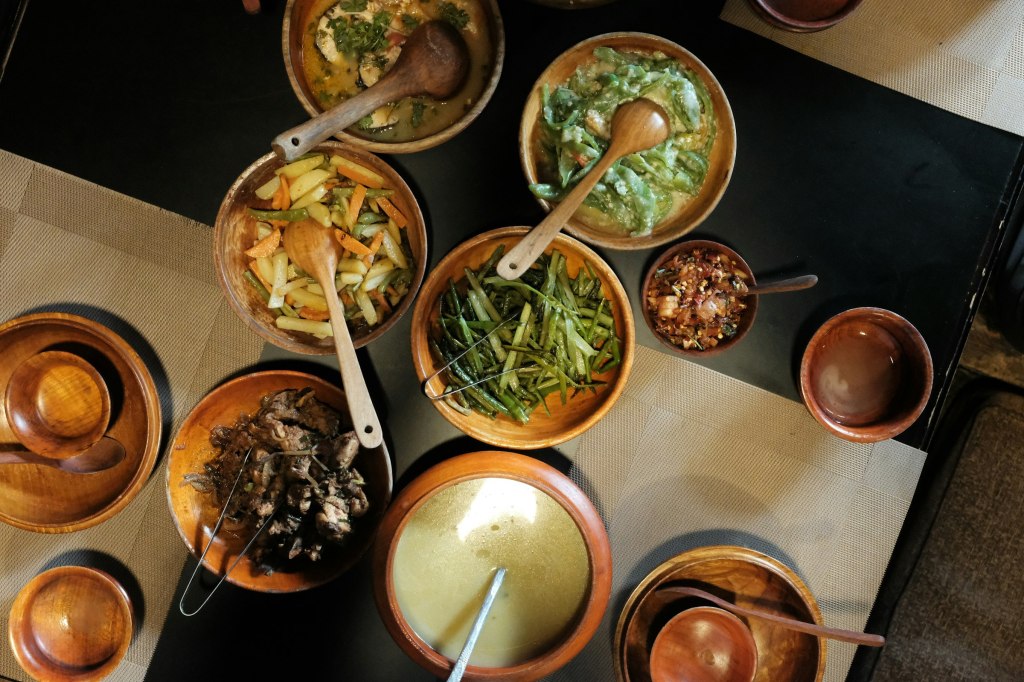
Fine dining in Tbilisi rarely looks like fine dining elsewhere. There are no hushed rooms with white tablecloths pressed to a crease. Instead you find candlelit townhouses, garden tables under old pines, a ladle collection on the wall and a waiter who might start singing. The cooking is serious, the wine is often poured from a clay vessel buried in the ground, and the evening tends to run long. Here are five tables that capture the city at its most generous.
Barbarestan: A Nineteenth-Century Cookbook, Revived
The story of Barbarestan begins at the Dry Bridge flea market, where its founder came across an old cookbook written by Princess Barbare Jorjadze in the 19th century. The family-run restaurant on Aghmashenebeli Avenue has built its menu around those recipes ever since, and the result feels like dinner in a cultured Georgian home of another era. Vintage interiors set the tone. Look for satsivi, turkey bathed in a cool walnut sauce, and duck breast with a glossy cherry sauce. Book ahead for evenings, and let the staff steer you toward a bottle from their Georgian list.
Café Littera: New Georgian Cooking in a Writers’ Garden
Behind the Writers’ House of Georgia on Ivane Machabeli Street in Sololaki, a shaded garden opens up beneath a towering pine. This is Café Littera, where chef Tekuna Gachechiladze, long credited with pioneering a lighter, modern style of Georgian cooking, reworks the classics with a sure and playful hand. Elarji, the stretchy cornmeal and cheese dish of western Georgia, arrives as sulguni croquettes with almond sauce. Beef tartare comes sharpened with adjika and pickled bladdernut buds. On a warm evening, with strung lights glowing in the branches, it’s one of the loveliest places to eat in the city.
Keto and Kote: A Mansion Terrace Above the City
Named for a beloved Georgian comic opera, Keto and Kote sits on a small hill in the Vera neighborhood, inside a 19th-century mansion with carved wooden balconies and a lush garden. The veranda has been restored with a light touch, so the house keeps its fin de siècle charm. The kitchen sends out polished versions of the classics: ajapsandali, a slow-cooked medley of eggplant and peppers, elarji, khachapuri and desserts that reward anyone who saves room. The lane is tucked away and can take a moment to find, so allow a few extra minutes, and reserve a terrace table if you can.
Shavi Lomi: The Black Lion’s Creative Georgian Kitchen
Shavi Lomi, which means black lion, was opened in 2011 by chef Meriko Gubeladze and is often named among the restaurants that first gave Georgian food a modern twist. It lives in a converted old house with mismatched wooden furniture, vintage tableware, old carpets and a candle on nearly every surface, plus a leafy courtyard for summer nights. The menu nods to the painter Niko Pirosmani and to home cooking. Start with the platter of pkhali, the vegetable and walnut pâtés, served with mchadi cornbread, pickles and cheese, then move on to shkmeruli, chicken in a rich garlic and milk sauce.
Azarphesha: Wine, Song and the Silver Ladle
An azarphesha is the silver ladle Georgian nobles once used to scoop and drink wine, and this intimate room near Freedom Square displays a wall of them alongside ceramic vessels and drinking horns. The owner, Luarsab Togonidze, is a collector and folklorist devoted to Georgian tradition, and John Wurdeman of the Pheasant’s Tears winery has advised on the food and wine. The menu ranges across the old Silk Road, from Persia to Byzantium, with garlic, eggplant, tahini and wild herbs, and follows the seasons closely: nettle pilaf in spring, baked polenta with wild mushrooms in autumn. On a lucky night, a table breaks into polyphonic song and the room joins in.
Tips for Fine Dining in Tbilisi
- Dinner starts later than you might expect, and evenings stretch out. Plan one reservation a night and leave room for a walk afterward.
- Ask about amber wine. Rkatsiteli or Kisi fermented on its skins in qvevri is the classic match for walnut sauces and herb-rich dishes.
- Order to share. Georgian meals are built around many plates arriving at once, the spirit of the supra feast.
- Garden and terrace seats are the first to go from late spring to early autumn, so reserve a few days ahead.
- Opening hours and menus change with the seasons, so confirm details directly with each restaurant as of this writing.
Taken together, these five tables show a city that treats dinner as a small celebration. Order slowly, raise a glass to whoever is sitting beside you, and let the night take its time.

