
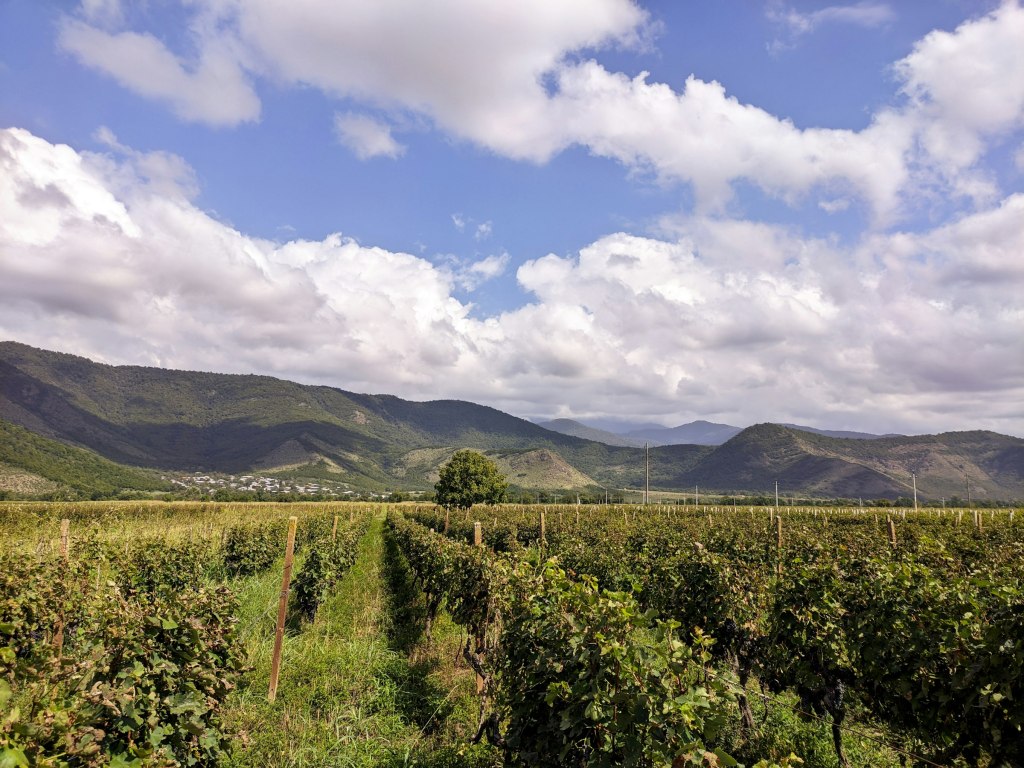
This Kakheti wine region guide begins with a simple idea: in eastern Georgia, wine is less a product than a way of life. The Alazani Valley spreads wide beneath the Greater Caucasus, and nearly every village keeps a marani, a family cellar where grapes ferment in qvevri, large clay vessels buried in the earth. The method is so central to Georgian identity that UNESCO added traditional qvevri winemaking to its list of Intangible Cultural Heritage in 2013. Saperavi is the region’s signature red, Rkatsiteli its leading white, and Kisi, Mtsvane Kakhuri and Khikhvi fill out a beautifully varied glass. Here are six wineries that show Kakheti at its most gracious.
1. Pheasant’s Tears, Sighnaghi
Founded in 2007 by Gela Patalishvili, an eighth-generation Georgian winemaker, and John Wurdeman, an American painter who made Georgia his home, Pheasant’s Tears helped bring qvevri wine to an international audience. The vineyards are farmed organically, the cellar work is gentle, and the pair have championed rare native grapes. Taste the amber Rkatsiteli and the red Shavkapito, then stay for lunch at the restaurant in Sighnaghi, where seasonal Georgian dishes arrive with a view across the valley. Seats are limited, so reserve ahead.
2. Tsinandali Estate, Tsinandali
Prince Alexander Chavchavadze, poet and founding figure of Georgian Romanticism, brought European winemaking techniques to this estate in the 19th century, and his house became a gathering place for writers. Today the palace is a museum filled with first editions, manuscripts and period furniture, set in parkland of around 1,600 plant species. The cellar holds a historic collection that includes a Saperavi from 1839, often described as the oldest bottled wine in Georgia. The estate is also home to Tsinandali Estate, A Radisson Collection Hotel, and each September since 2019 it has hosted the Tsinandali Festival of classical music in an amphitheater designed by Xavier Fabre.
3. Alaverdi Monastery Cellar, Akhmeta
Alaverdi was founded in the 6th century, and its great cathedral was built in the 11th. Monks have made wine here since 1011, which is why the bottles carry the words “since 1011.” Winemaking resumed in 2006 after a long pause, and today a small group of monks tends the marani, fermenting grapes with their skins in buried qvevri for about six months. An original 11th-century qvevri is on display. Tours run daily and are booked in advance through the monastery, and modest dress is customary.
4. Twins Wine Cellar, Napareuli
Twin brothers Gia and Gela Gamtskitsulashvili built this winery around their family’s winemaking traditions in the village of Napareuli, about 25 kilometers from Telavi. The cellar holds more than 135 qvevri, and its museum explains every step of the old process, from pressing to sealing. Stay the night at the 22-room boutique hotel with its outdoor pool, and book a master class in baking bread in the tone oven, folding khinkali or dipping churchkhela.
5. Khareba Winery, Kvareli
Near Kvareli, Khareba keeps its wines inside the mountain itself. The cellar is a 7.7-kilometer tunnel system, two long parallel galleries linked by 13 smaller ones, holding a steady 12 to 14 degrees Celsius year-round. Walking into the cool, quiet dark with glass in hand is a memorable way to taste. Tasting options range from a short classic flight to longer qvevri selections, some with churchkhela making or bread baking added.
6. Schuchmann Wines Château, Kisiskhevi
Founded by Burkhard Schuchmann, this estate in the village of Kisiskhevi, a few kilometers from Telavi, pairs vineyards with an inviting hotel. Rows of vines run toward the Caucasus, and the wine spa offers grapeseed scrubs and wine baths using oil pressed at the château. Settle in at the restaurant with a bottle of Saperavi and watch evening settle over the valley.
Planning Your Kakheti Wine Region Trip
- Base yourself in Sighnaghi or Telavi. Sighnaghi’s hilltop lanes look over the Alazani Valley; Telavi sits closer to Tsinandali, Napareuli and Kisiskhevi.
- Hire a driver for tasting days so everyone can enjoy each glass.
- Harvest, known as rtveli, arrives in late summer and autumn and is the most festive time to visit.
- Ask for amber wine. Skin-contact whites from qvevri are the region’s great gift to the wine world.
- Tasting formats and hours change by season, so confirm visits directly with each winery as of this writing.
Kakheti rewards anyone who slows down. Leave time for a long lunch, a toast or two from your host, and a final glass as the mountains turn pink in the evening light.

