
This Beirut travel guide pulls the useful details into one calm read: where to stay by the sea or in the old townhouse quarters, where to sit down for a long Lebanese table, which museums and seafront walks are worth the morning, and what a day tends to cost. Beirut is a city of generous hosts and late dinners, and it repays travelers who arrive with a flexible plan and an appetite.
Prices last updated October 2026. Rates move with the season and the exchange rate, so please treat every figure as a planning guide and let each hotel, venue and operator’s official site have the final word. Many Beirut prices are quoted in US dollars, so most amounts here are given in dollars directly.
Quick facts
- Currency: The Lebanese pound (LBP), which has traded at about 89,500 to the US dollar for some time. US dollars are widely used and accepted, and change may come back in pounds.
- Language: Arabic, with French and English widely spoken.
- Plug type: Several types are in use, so carry a universal adapter (about 220 V).
- Time zone: UTC+2 in winter and UTC+3 in summer.
- Airport transfer: Beirut-Rafic Hariri International Airport is about 10 kilometers from the center, roughly 20 minutes by car. A taxi is generally about US$25 to 35; agree the fare before you set off, or book a ride through an app or your hotel.
- Best months: April to June and September to November.
Beirut travel guide: when to go
Spring and autumn suit the city best. Winter is mild and rainy, with average daytime highs near 17 C in January, which makes museum days and long lunches easy. Summer is long, warm and humid on the coast, with highs near 31 C in August, so plan sightseeing for the morning and keep the afternoon for the pool or the sea. Most of the year’s rain falls between October and April. If you want mountain air as well, the heights above the city stay cooler in summer.
Before you book
Government travel advice for Lebanon is detailed and updated often, and it varies by district. Recent guidance has treated the airport road as open, and central neighborhoods such as Achrafieh, Hamra, Downtown and the Zaitunay Bay waterfront are where most visitors base themselves. Review your own government’s current advice, choose flexible or refundable rates, carry travel insurance, and ask your hotel for up-to-date local guidance on the day. Opening hours and ticket details for individual venues can change at short notice, so confirm them directly.
Where to stay in Beirut
Achrafieh pairs restored townhouses with quiet streets and the dining of Gemmayzeh and Mar Mikhael. Downtown (the Central District) is walkable, with stone arcades, squares and the souks. Zaitunay Bay and the Corniche put you beside the marina and the sea. Hamra is the lively, café-lined choice for budgets and long stays.
At the top end, Phoenicia Beirut, the landmark hotel beside Zaitunay Bay since 1961, lists from about US$300 a night. Le Gray, a design-led hotel in Downtown that reopened in February 2026 after a restoration, lists from about US$350. Albergo, a boutique hotel of 33 suites in a restored Achrafieh townhouse with a rooftop pool (and the only Relais & Châteaux address in Lebanon), starts around US$280. Leading hotels tend to fall between US$280 and 450 a night, with higher rates in summer and around major events.
Comfortable options are plentiful. Arthaus Beirut has been listed from about US$250, Monot Suites from about US$220, Radisson Blu Martinez from about US$160, Hotel Lost Ashrafieh around US$150, and Sodeco Suites around US$125. Budget stays include Tilia Hotel in Achrafieh from about US$90, and in Hamra El Sheikh Suites Hotel (about US$70) and Hamra Urban Gardens (about US$77).
A few small habits make any stay easier. Ask for a room away from the street if you like quiet, since evenings in Gemmayzeh and Monot run late. Breakfast is often included at boutique hotels, and a rooftop pool, where one is offered, is at its best in the early evening. Book direct where you can, because hotels will often confirm airport pickups, restaurant tables and drivers for the day in the same message.
Where to eat and drink
Lebanese food is a pleasure of small plates: hummus, tabbouleh, kibbeh, grilled halloumi, warm bread and a long run of mezze that arrives until you tell the waiter to pause. A simple meal at an inexpensive restaurant averages about US$12, with a range of US$7 to 25. A three-course dinner for two at a mid-range restaurant averages about US$69 without drinks (range about US$50 to 175), and a cappuccino is around US$4.50.
For a farmers’ kitchen, Tawlet in Mar Mikhael serves a daily Lebanese home-cooking buffet at lunch, Monday to Saturday, with a brunch on Saturdays. On Saturdays from 9 am to 2 pm, the Souk el Tayeb farmers’ market sets up on Armenia Street in Mar Mikhael, so the two pair naturally. In the evening, Beihouse in Gemmayzeh reimagines Lebanese dishes in restored villas, Em Sherif in Monot serves a long sharing menu of about thirty dishes with live music, and Baron in Mar Mikhael builds small plates around market produce. Book the popular ones ahead, and expect a 9 pm reservation to be perfectly normal. Our guide to fine dining in Beirut describes them in more detail.
Morning is for manoushe, the flatbread baked with thyme or cheese, and a small glass of strong coffee. Local beers such as Almaza are easy to find, and the nightlife quarters of Gemmayzeh and Monot Street fill up after dark.
What to see
Sursock Museum, in a villa in Achrafieh, is free to enter and is open Wednesday to Sunday from 10 am to 6 pm; Em Shérif au Musée, on the museum grounds, is open daily from 10 am to midnight. Check the current exhibitions before you go. The National Museum of Beirut, with about 1,300 exhibits from prehistory to the Mamluk period, is Lebanon’s main archaeology museum. The American University of Beirut Archaeological Museum and the Robert Mouawad Private Museum are good companions for a second afternoon.
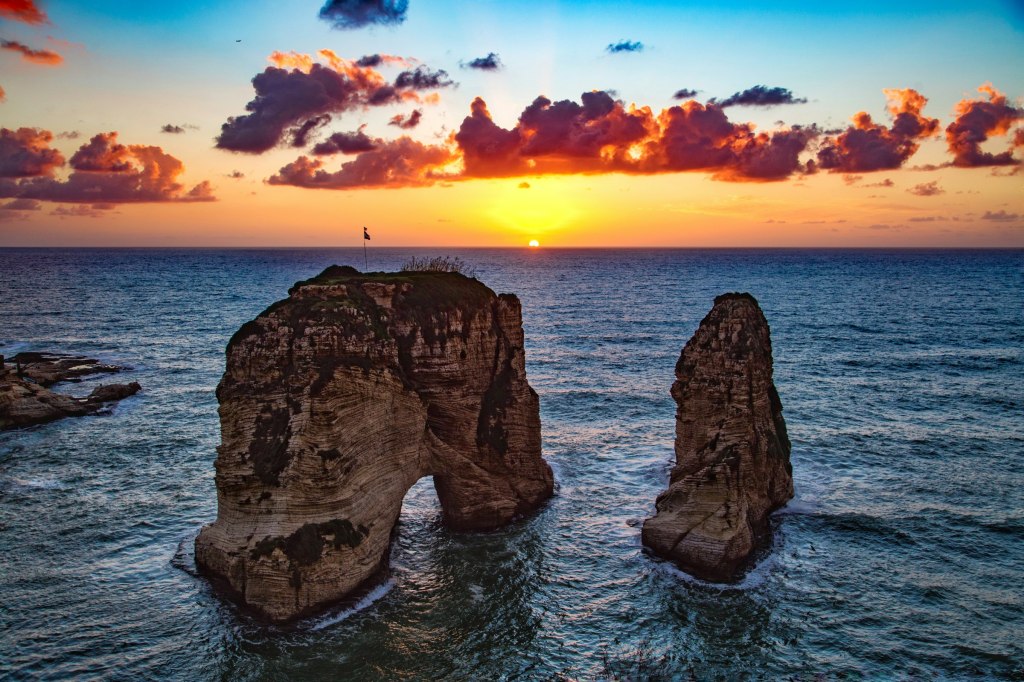
The Corniche is a 4.8-kilometer seafront promenade, and at its highest point at Raouche the great offshore Pigeon Rocks stand in the sea. Downtown rewards a slow loop through Place de l’Etoile and the Beirut Souks, which hold over 200 shops. Mosque and church visits call for covered shoulders and knees.
A short two-to-three-day itinerary
Day one. Walk the Corniche in the early light and pause at Raouche. Take lunch in Hamra, spend the afternoon in Downtown and settle in for dinner in Gemmayzeh.
Day two. Visit the Sursock Museum when it opens (Wednesday to Sunday), then the National Museum. Dinner at Em Sherif or Beihouse.
Day three. If it is a Saturday, begin at the Souk el Tayeb market and stay on for Tawlet. For a half-day outing, Byblos is about 42 kilometers up the coast, a drive of about 40 minutes; see our guide to a day in Byblos, and check current regional advice before choosing excursions.
Shopping, craft and a slower hour
Beirut has a design tradition of its own. The Elie Saab building on Omar Daouk Street in the Central District houses the couture salon and a boutique that opens Monday to Saturday, 10 am to 7 pm, with couture and bridal by appointment, and Tabbah, the jewelry house founded in 1862, has a boutique on Allenby Street. Our guide to couture and jewelry in Beirut lists three more ateliers. For a quiet start or finish to a trip, a slow walk beneath the cedars is described in our note on forest bathing in Lebanon. Spa treatments at the larger hotels, including Phoenicia’s SPA, are a gentle way to end a long day.
Getting around Beirut
Taxis start at about US$5 on a standard tariff, and many are hailed on the street or arranged through an app. Agree the price before departure, as meters are not always used, and most central trips are short. Shared service taxis run set routes at low fares. The Corniche, Downtown and Achrafieh are pleasant on foot, and a driver for the day is the simplest way to reach the coast.
Practical notes for a smooth trip
Tipping is simple: a service charge is often added in restaurants, and where it is not, about 10 percent is a kind gesture. Taxi drivers are not routinely tipped. Alfa and touch are the two mobile operators, both with help desks at the airport; prepaid tourist plans have started around US$10 to 15, and your phone must be unlocked, so confirm current offers on arrival. Many Western visitors, including those from the United States, United Kingdom, Canada, Australia and most of Europe, have received a free one-month visa on arrival that can be extended, but rules differ by passport and change, so confirm with the Lebanese authorities and your airline before you fly. Dress is relaxed in the city and modest at religious sites. Evenings begin late.
Beirut price guide per day
| Style | Daily budget per person (two sharing) | What it buys |
|---|---|---|
| Budget | About US$60 to 90 | Hamra guesthouse or small hotel, casual meals, taxis |
| Comfortable | About US$150 to 230 | Achrafieh boutique hotel, mid-range dinners, museums |
| Luxury | From about US$400 | Landmark hotel suite, long tasting dinners, private driver |
Prices last updated October 2026. Rates change with the season and the exchange rate, and the official websites are the final word.
Insider tips
Saturday is the best single day for food, with the farmers’ market in the morning and Tawlet’s brunch. Museums have set weekly rhythms, so plan the Sursock for a Wednesday to Sunday visit. Carry some small dollar notes for taxis and tips. Beirut dines late, so reserve for nine and keep the afternoon free. Ask your hotel to arrange a car for the coast, and book couture or jewelry appointments a few weeks ahead.

