
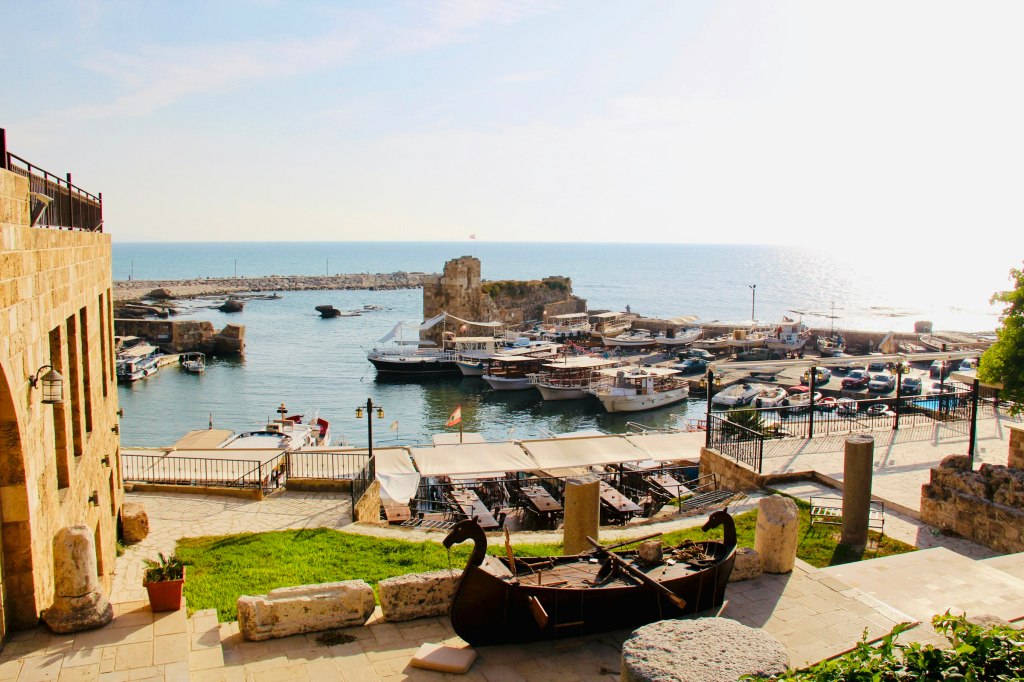
Some places wear their age lightly. A day in Byblos, about 42 kilometers up the coast from Beirut, feels like walking through seven thousand years of history in comfortable shoes. Known in Arabic as Jbeil, this small harbor town is counted among the oldest continuously inhabited cities in the world, and its archaeological site has been on the UNESCO World Heritage List since 1984. The Greeks named papyrus after the town’s busy trade in it, which is why the word for book, and ultimately bible, traces back here.
Yet Byblos is anything but dusty. It’s a place of sea light, jasmine over stone walls and long lunches by the water. Here is how to spend one well-paced day.
Morning: the citadel and the ancient city
Leave Beirut early. Depending on traffic, the coastal drive takes around 40 minutes, and arriving before the heat rises makes the archaeological site a real pleasure. Your entry point is the Crusader citadel, built in the twelfth century from older stone, much of it reused from Roman buildings. Climb to the top of the keep. From there, the whole story spreads out below you: the harbor, the red roofs of the old town and, beyond them, the blue line of the Mediterranean.
Below the walls, the excavations reveal layer after layer of settlement. Look for the Phoenician temple foundations, the ancient city ramparts and the small Roman theater, which sits so close to the sea that you can hear the waves from its stone seats. Give yourself about two hours. A licensed guide at the entrance can bring the layers to life, and it’s money well spent.
- Wear shoes with good grip; the ancient paving is uneven and polished smooth in places.
- Bring water and a hat in summer, as there is little shade on the site.
- Check opening hours locally before you set out, since they can change with the season.
Midday: the old souk of Byblos
Step out of the site and straight into the old souk, a short stretch of narrow cobbled lanes lined with low stone shopfronts. There’s no entry fee, just the pleasant problem of choosing. You’ll find handmade crafts and jewelry, textiles and scarves, ceramics and small antiques, with a few shops doubling as galleries. Spices, olive oil and Lebanese sweets are sold just beyond the souk itself, and they make easy, beautiful gifts.
Take a coffee at one of the cafes and watch the town go by. Byblos moves at a gentler pace than the capital, and the afternoon tends to slow down to match it.
Afternoon: a church, a museum and a quiet lane
A few minutes’ walk from the souk, the Church of St. John the Baptist dates to the twelfth century and keeps the clean, sturdy lines of its Crusader origins. Its open-air stone baptistery is one of the loveliest corners in town, especially when the light softens. Nearby, the town’s wax museum offers a playful look at figures from Lebanese history and culture, a pleasant half hour if you’re traveling with family.
Then simply wander. The residential lanes around the old town are some of the prettiest on the coast, with arched doorways, wrought iron balconies and bougainvillea spilling over sandstone.
Golden hour: the ancient harbor
End where the town began, at the little horseshoe harbor that has sheltered boats since antiquity. It’s still a working fishing port, and in the late afternoon the painted wooden boats rock gently beside the quay while the sun drops toward the water. Walk the waterfront, then settle at one of the harbor restaurants for grilled fish, tabbouleh bright with parsley and lemon, and a glass of Lebanese wine as the stone glows amber.
Tips for a day in Byblos
- Timing: spring and autumn bring soft light and comfortable temperatures for walking the site.
- Getting there: a private driver from Beirut is the simplest option and lets you stay for sunset.
- Pacing: one full day covers the highlights comfortably; an overnight stay lets you see the harbor at dawn.
- Bargaining: friendly negotiation is part of the souk tradition, so smile and enjoy it.
By the time you drive back south, the lights of the coast strung out beside you, Byblos will have done what it has always done so well. It makes deep time feel close, warm and entirely human.

