
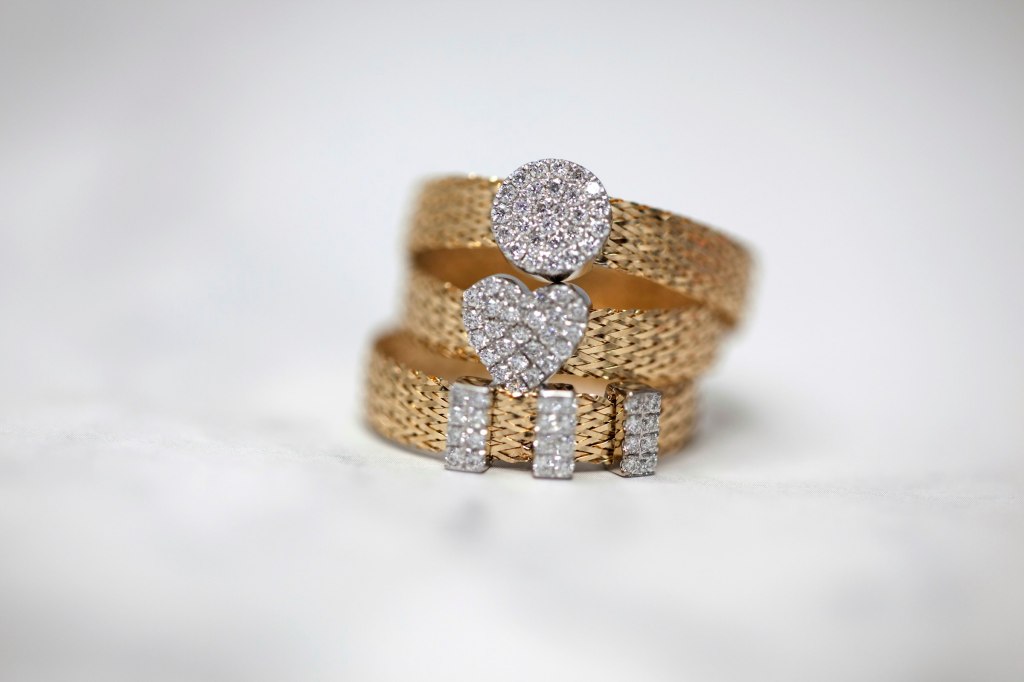
Beirut has a long, glittering relationship with beautiful things. Goldsmiths worked its old souks for generations, and its couturiers now dress red carpets around the world. A visit to the city’s ateliers is one of the most rewarding ways to understand it. This guide to couture and jewelry in Beirut gathers five houses, each with its own story and its own signature, all of them deeply rooted in the city.
Hours and appointment policies can change, so contact each house before you visit. For bespoke work and bridal, an appointment is always the most gracious approach.
Elie Saab: haute couture in Beirut’s center
The house of Elie Saab is the obvious and glorious place to begin. Its Beirut headquarters, the Elie Saab Building on Omar Daouk Street in the Beirut Central District, rises five stories and brings almost the entire maison under one roof: a haute couture salon, bridal services, the ready-to-wear boutique, the full accessories range, children’s wear, and the workshops and studios where the gowns take shape.
Expect the house signatures: fluid silhouettes, embroidery that catches light like water, and a romantic sense of occasion. As of this writing, the boutique opens Monday to Saturday from 10 am to 7 pm, with couture and bridal by appointment.
Tabbah: a jewelry house since 1862
Few jewelers anywhere can match the lineage of Tabbah. Joseph Tabbah founded the house in Beirut in 1862, and it remains family owned, led today by Nabil and Nagib Tabbah, with Nagib as chief designer. The house is known for bespoke pieces, and its most famous creation may be the Infinite Cascade necklace, designed for Princess Charlene of Monaco for her 2011 wedding: 18-karat rose gold set with 1,237 diamonds and six pear-shaped pearls.
In 2014 the house opened a Beirut boutique on Allenby Street, in the elegant streets of the city center, a fitting home for a name so tied to the city’s history.
Selim Mouzannar: rose-cut diamonds and color
Selim Mouzannar comes from a family of jewelry craftsmen originally from Damascus, and he learned his trade in his father’s shop in Beirut’s old souks. He opened his own workshop in Beirut in 1993, with a flagship store following a few years later. His work is instantly recognizable for its rose-cut diamonds, often set using a technique known as Falamenk, the Arabic rendering of “Flemish,” which gives stones a soft, candlelit glow.
His color sense is joyful and confident. The Amal necklace of 2016, set with Colombian emeralds from the Muzo mine including rare trapiche stones, won the colored gemstones category at the Couture Award in Las Vegas.
Nada G: Beirut’s architecture in gold
Nada Ghazal spent a decade in advertising before turning to jewelry. Her first collection of 25 handmade pieces, debuted in 2003, sold out within three days, and within a year she had launched her own house with a boutique and workshop. Beirut is her muse: arches become domes, scattered stones recall the city’s winding streets, and hand-painted enamel blossoms evoke summer nights. Every piece is finished by hand in her atelier, and women lead the company’s management.
Sarah’s Bag: embroidery with purpose
Sarah Beydoun launched Sarah’s Bag in 2000, and it has grown into one of the most admired accessories labels to come out of Lebanon. The bags are beaded, embroidered and sequined by a network of women artisans, many of whom have found new opportunity through the work, and the signature Arabic calligraphy designs are true collector’s pieces. As of this writing, the house is presenting its Fall 2026 collection, including the Love, Lebanon pieces inspired by vintage travel posters.
Tips for shopping Beirut’s ateliers
- Book appointments for couture, bridal and bespoke jewelry a few weeks ahead; fittings may require more than one visit.
- Ask about the making. Ateliers are proud of their craft, and the story of a piece often becomes part of its value to you.
- For commissions, discuss timelines and shipping clearly at the start, especially if you’ll be leaving Lebanon before the piece is finished.
- Pair a morning downtown at Elie Saab and Tabbah with lunch in nearby Gemmayzeh for an easy, elegant day.
Beirut’s makers share something beyond talent: a belief that beauty is worth the patience it takes. Bring home a ring, a clutch or simply the memory of a salon afternoon, and you carry a little of that belief with you.

