
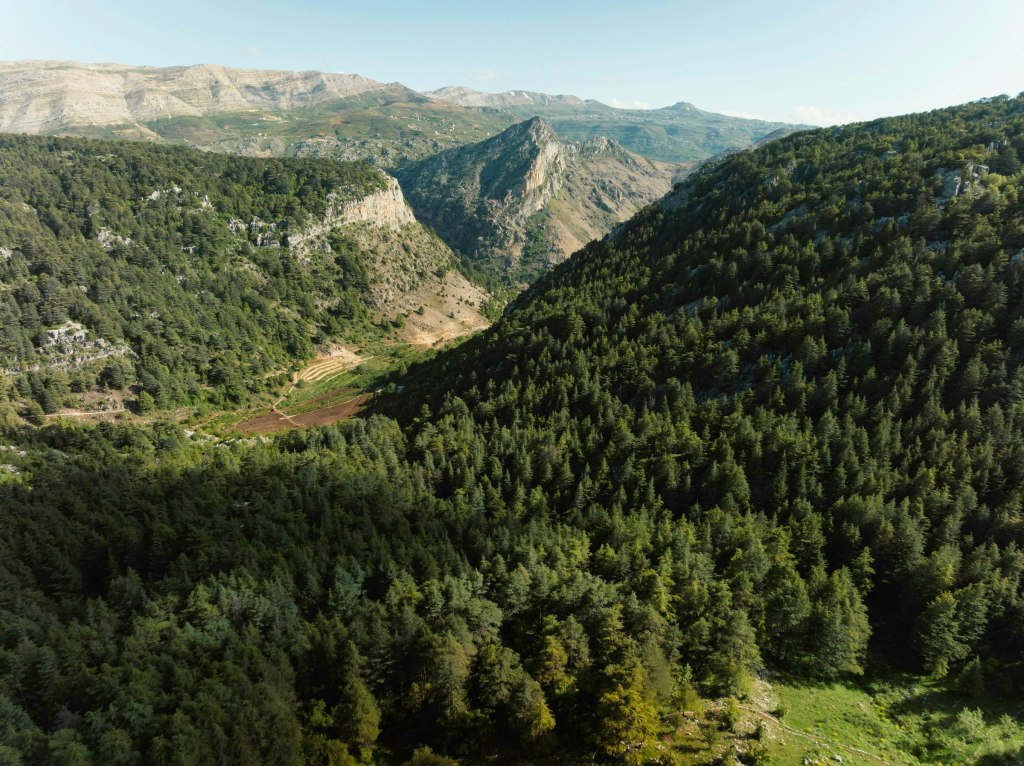
There is a particular hush under a cedar canopy. The air smells of resin and cool earth, sound softens, and the light arrives in slanted, green-gold pieces. Forest bathing in Lebanon has a setting few places can match: the Shouf Biosphere Reserve, a protected landscape of roughly 500 square kilometers, about five percent of the country, where some of the oldest and most impressive stands of the Lebanon cedar, Cedrus libani, still grow.
Forest bathing, a translation of the Japanese shinrin-yoku, is not a hike in the usual sense. It’s an invitation to slow down, use your senses and simply spend time among trees. Here is what the practice involves, what the research suggests, and how to enjoy it in the Shouf.
What research suggests about time among trees
Scientists have studied forest bathing for a few decades now, much of the early work coming from Japan. Several reviews of this research report that short, relaxed walks in forests are associated with lower self-reported stress, improved mood and, in some studies, lower heart rate and blood pressure compared with similar walks in urban settings.
The findings are encouraging, but they deserve a calm reading. Many studies are small, short and difficult to blind, since participants know whether they are in a forest. Effects measured on the day may not tell us much about long-term health. The fairest summary is that time in nature appears to support relaxation and a sense of well-being for many people, and that it pairs naturally with other healthy habits rather than replacing them.
Where to walk in the Shouf cedars
The reserve has three main cedar forest entrances, each with visitor information and restrooms:
- Maasser el Shouf Cedar Forest: home to some of the oldest trees, including the celebrated Lamartine cedar, with self-guided trails and guides available for longer walks.
- Barouk Cedar Forest: trails across more than 400 hectares of cedar woodland, plus a stone observation point above Hill Lake for quiet wildlife watching.
- Ain Zhalta and Bmohray Cedar Forest: around 170 hectares of forest trails, lovely for a softer, shorter outing.
The reserve also runs seasonal walks and village gatherings. As of this writing, its calendar has included events such as a cherry festival in Jbaa El Shouf and a sunset walk in Barouk, so it’s worth checking what’s on before you go.
Seven tips for a mindful cedar walk
- Go slowly. Aim to cover less ground than you think. The point is presence, not distance.
- Leave the phone in your pocket. Set it to silent and take your photographs at the end.
- Engage each sense in turn. Notice the scent of the bark, the texture of fallen needles, birdsong, the temperature of the air on your skin.
- Pause often. Sit on a rock or simply stand still for a few minutes and let your breathing find its own unforced rhythm.
- Dress for the mountains. The forests sit at altitude, so bring layers, sturdy shoes and water, even on a warm day.
- Walk with a guide on longer trails. Reserve guides know the paths and the stories of individual trees, which adds a lovely dimension.
- Leave only footprints. Stay on marked trails so these old forests can keep thriving.
Making a day of it
Mornings tend to be the most peaceful time beneath the trees, with cool air and soft light. Afterward, the villages of the Shouf invite a long lunch of mountain cooking and fresh produce. The reserve’s own “Adopt a Cedar” program offers a thoughtful way to keep a connection with the forest long after you’ve left, and the small gift shops at each entrance carry locally made products.
Cedars have stood on these slopes for centuries, unhurried and patient. A few hours walking among them is a gentle reminder to borrow a little of that patience for yourself.
This article is general information, not medical advice; please consult a qualified clinician about your own health.

