
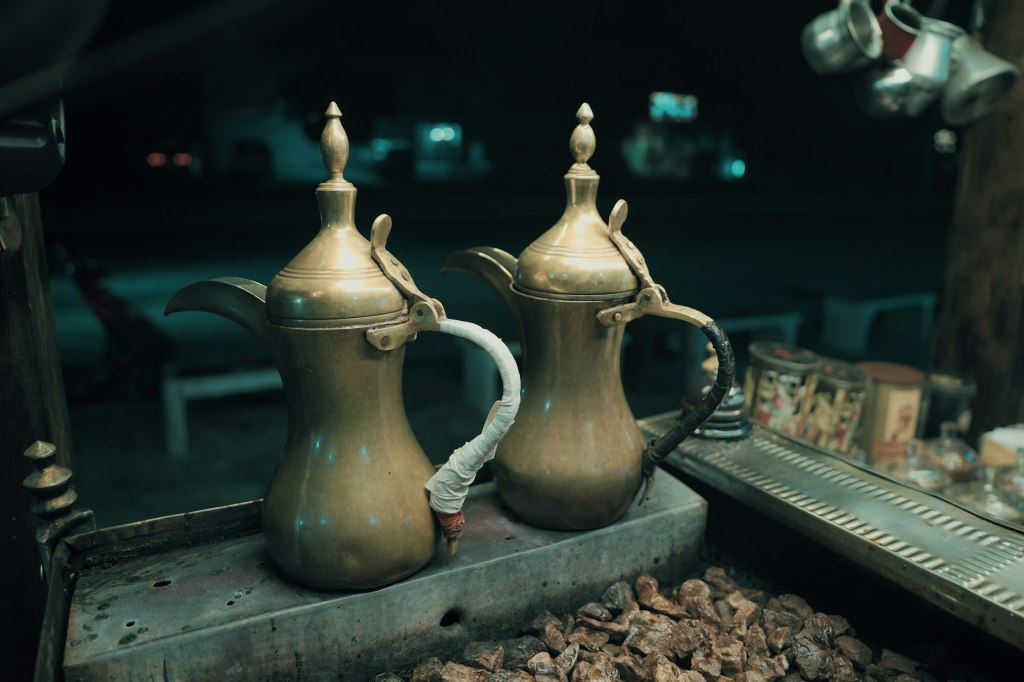
Arabic coffee in Qatar arrives without fuss and carries plenty of ceremony. A small handleless cup, a golden pour from a long-spouted pot, a few dates on the side. It’s called gahwa, and in Qatar it’s one of the first things a host offers. Here’s how it’s made, why it has UNESCO recognition, and what researchers can and can’t say about coffee in general.
Arabic coffee in Qatar: what’s in the cup
Gahwa looks nothing like espresso. It’s pale gold, closer to tea in color, and fragrant with cardamom. Beans are roasted lightly, then boiled with cardamom and saffron, and some households add cloves. The coffee is poured from a dallah, the traditional pot, into tiny cups that are refilled in small measures.
Sugar usually isn’t added. Dates provide the sweetness, which is why the two arrive together.
A ritual with UNESCO recognition
In 2015, Arabic coffee was inscribed on UNESCO’s list of intangible cultural heritage, in a joint effort by Qatar, Saudi Arabia, the United Arab Emirates and Oman. Across the Gulf it’s understood as a gesture of generosity and welcome, and it’s traditionally served in the majlis, the gathering room at the center of social life.
Where to try it in Doha
Souq Waqif is the easy starting point, with shops that sell the coffee and spices used at home and cafes pouring it by the cup. For a more guided introduction, cultural houses such as Embrace Doha, in Souq Al Wakrah, host tastings that explain the story behind the pot, and the National Museum of Qatar also tells the story of qahwa. Our guides to shopping in Doha and to the city’s museums make good companions.
What the research says
Coffee is among the most studied drinks in the world, and large observational studies in adults often link moderate intake with neutral or favorable health outcomes. That kind of research can show associations, though, not cause and effect, and results vary with how the coffee is brewed and what else a person’s diet includes.
Gahwa itself hasn’t been studied as closely as filtered or espresso coffee. Cardamom and saffron have attracted scientific interest, but most of that work is early-stage, so they’re best enjoyed as flavor rather than as a health strategy. Because gahwa is served in small cups, a single serving tends to contain less caffeine than a large mug, though strength varies by roast and brew.
Caffeine does affect sleep for many people, and its effects can linger for hours. If an evening cup keeps you awake, enjoy gahwa earlier in the day. People who are pregnant, have heart rhythm concerns or take regular medication may have specific caffeine guidance from their own clinician.
How to enjoy it well
Accept the first pour. Hold the cup in your right hand, sip slowly, and when you’ve had enough, give the cup a gentle side-to-side shake to signal you’re finished. Traditionally the host keeps refilling until that sign is made.
Then sit longer than you planned. The point of gahwa is the pause, and a pause is good for most of us.
This is general information and not medical advice. Please consult a qualified clinician about your own health.

