
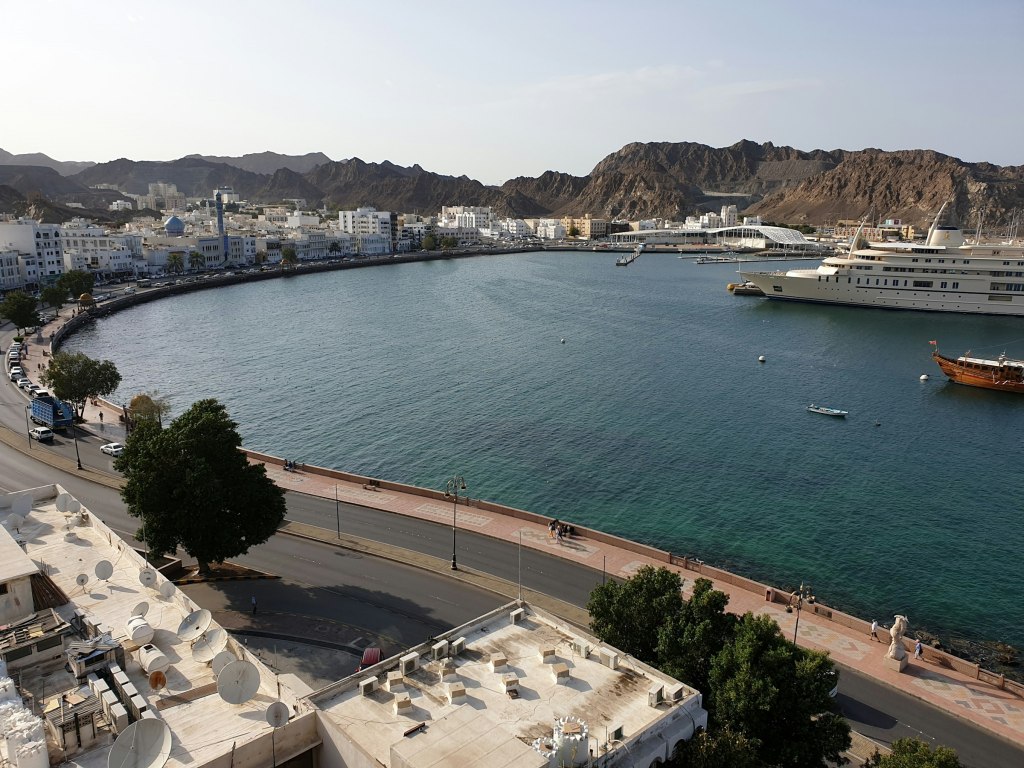
This Muscat city guide is for travelers who like their capitals unhurried. Oman’s seat of government hugs a curve of sea beneath dry, sculpted mountains, with white low-rise buildings, a fragrant old souq and a corniche that looks best at dusk. Here you’ll find neighborhoods, named hotels and restaurants, entry fees, transport costs and a realistic daily budget for 2026.
Prices last updated October 2026. Rates move with season and exchange rates, so treat every figure as a planning range and let official hotel, museum and operator sites have the final word.
Quick facts
- Currency: Omani rial (OMR), pegged at about $2.60 per rial. Dollar figures below use that rate. One rial is 1,000 baisa.
- Language: Arabic, with English widely spoken in hotels, shops and restaurants.
- Plugs: UK-style Type G, 240 V.
- Time zone: GMT+4, all year.
- Airport: Muscat International (MCT), about 32 km from Muttrah and Qurum. Official taxi desks in arrivals quote about OMR 10 ($26) to central hotel areas, and the A1 airport bus to Ruwi costs OMR 1 ($2.60) and takes about 45 minutes.
- Best months: October through April, with December to February the most comfortable.
When to go
Muscat’s season runs from October to April. By December the sea breeze is soft, mornings are made for walking the corniche, and a light jacket is enough after sunset. May through September brings temperatures of roughly 38 to 45 degrees Celsius (100 to 113 Fahrenheit), so that’s the time for early starts, long lunches indoors and the pool. Hotel rates follow the same curve, so the warmer months can be good value for those who enjoy a resort pool.
Where to stay
Each part of the city has a distinct personality. Muttrah is the port quarter, with the corniche, the souq and a fort above the harbor. Old Muscat is small and ceremonial, with the Al Alam Palace between two Portuguese-era forts. Qurum and Shatti Al Qurum bring beaches, cafés and restaurants. Al Mouj has a marina and promenade. Further out, Bandar Jissah and North Ghubra hold the big resorts. Our guide to luxury hotels in Muscat goes deeper on the top end.
Typical nightly rates seen in October 2026, before taxes and service charges:
- Mutrah Hotel, Muttrah: from about $36 (OMR 14). A simple base within reach of the corniche.
- Crowne Plaza Muscat OCEC: about $110 (OMR 42). Business-friendly, with a relaxed Qurum Heights setting.
- InterContinental Muscat: about $215 (OMR 83). A Shatti Al Qurum address with several restaurants on site.
- Kempinski Hotel Muscat: about $325 (OMR 125). A polished beachfront stay at Al Mouj.
- Al Bustan Palace, a Ritz-Carlton Hotel: about $345 (OMR 133). A grand, landmark resort set against the mountains.
- The Chedi Muscat: about $235 to $385 (OMR 90 to 148). Minimalist, quiet, in North Ghubra, with a long beach.
Where to eat and drink
Omani food is gentle and generous: slow-cooked lamb, saffron rice, grilled fish and fragrant spices rather than fire. Shuwa, meat marinated in spices and cooked underground for a day or more, is the celebratory dish. Harees (wheat and meat), mashuai (grilled kingfish with rice) and halwa are all worth ordering. Our guide to where to dine in Muscat covers the hotel tables.
For a first meal, try Bait Al Luban, an Omani restaurant in an old building on the Muttrah corniche, known for shuwa and harees. In Qurum, Ubhar serves contemporary Omani cooking, and Kargeen Caffe is a favorite for marinated prawns and whole fish. Bin Ateeq offers traditional floor seating and shared trays. At the Royal Opera House, Al Angham is the place for Omani fine dining.
Typical costs per person:
- Street food: mishkak (grilled skewers) at the Al Seeb beach stalls cost about OMR 0.2 to 0.4 ($0.50 to $1) a skewer, and a shawarma or canteen meal runs OMR 0.5 to 1.5.
- Local restaurants: OMR 1 to 5 ($2.60 to $13).
- Sit-down Omani restaurants: OMR 4 to 8 ($10 to $21).
- Mid-range with drinks: OMR 8 to 20 ($21 to $52).
- Special-occasion dining: OMR 25 to 60 and above ($65 to $156+).
Omani coffee, kahwa, is pale and scented with cardamom and rose water, served with dates. Accept a cup and shake the empty one slightly to say you’ve had enough. A chai at a local shop is about OMR 0.3. Alcohol is served in licensed hotels and restaurants.
What to see
Start early at the Sultan Qaboos Grand Mosque. Non-Muslim visitors are welcomed on Saturday to Thursday mornings, from about 8:30 to 11:00, and most listings show entry as free, though one current listing shows a small fee, so confirm on the official site. Women should wear long, loose sleeves and trousers or a long skirt with a headscarf. Men need trousers and covered shoulders. Arrive before 9:00 and the marble courtyards are at their most serene.
Muttrah Souq is free to wander, trading from about 9:00 to 13:00 and again from 16:00 to 21:00, with a late opening on Fridays. Small bags of frankincense cost about OMR 2 to 5 ($5 to $13). Our pieces on Amouage and the scent of Oman and frankincense in Oman tell the story behind the fragrance.
The National Museum of Oman charges about OMR 5 ($13) for visitors, with hours from 10:00 to 17:00. Bait Al Zubair, a family museum of Omani jewelry, weapons and costume in Old Muscat, is about OMR 3 ($8) and open Saturday to Thursday. The Royal Opera House runs daytime tours for roughly OMR 2 to 3 ($5 to $8) outside rehearsal days.
On the water, dolphin-watching trips leave from Bandar Al Rowdha, usually in the morning for two to three hours. A half-day boat to the Daymaniyat Islands is about OMR 20 to 30 ($52 to $78).
A two-day itinerary
Day one. Reach the Grand Mosque at opening, then drive to Old Muscat for the palace facade, Bait Al Zubair and a coffee. Lunch at Bait Al Luban. Late afternoon, walk the Muttrah Souq as the lights come on and buy a little frankincense.
Day two. Go to the National Museum for an unhurried morning, rest in Qurum, then take a sunset walk on Shatti Al Qurum beach. Dinner at Ubhar or at your hotel. If you have a third day, our guide to Nizwa and Jebel Akhdar shows what the mountains offer.
Shopping, culture and wellness
Oman’s crafts are quiet and beautiful. Look for silver khanjar daggers, woven cloth, rose water and, above all, frankincense and perfume. Muttrah Souq is the classic place to browse, and the shops around it are happy to explain grades of resin and how to burn it. Hotel spas make a gentle counterpart to a day of sightseeing, and a slow hour with rose water and incense is a very Omani way to end it.
Day trips
Muscat is a good base for the coast and the mountains. The sea route south leads to Bimmah Sinkhole and Wadi Shab, a green gorge with turquoise pools reached by a short boat crossing. Inland, the forts of Nizwa and the cool heights of Jebel Akhdar are a full day by car. Many hotels can arrange a driver, and shared tours are the easiest way to travel on a smaller budget.
Getting around
Muscat is spread out along the coast, so taxis and rental cars are the practical choices. Official taxis use a meter at OMR 1.5 plus OMR 0.25 per kilometer, and typical city rides run about OMR 3 to 6 ($8 to $16). If a taxi has no meter, agree the fare before you set off. The OmanTaxi and Otaxi apps give fixed fares, and Otaxi is typically 20 to 30 percent cheaper than street taxis. City buses cost 200 to 500 baisa a ride and are paid in cash.
A rental car is about OMR 15 to 20 ($39 to $52) a day. Shared day tours to Bimmah Sinkhole and Wadi Shab are about OMR 10 to 15 ($26 to $39) per person, with a boat crossing at Wadi Shab for about OMR 1.
Practical tips
- Visas: Oman lists visa-free entry for up to 14 days for citizens of more than 100 countries, including the US, UK, EU states, Canada and Australia. An e-visa for a month has been listed at about OMR 20 ($52). Check the Royal Oman Police portal for your passport.
- Dress: Shoulders and knees covered in souqs and mosques, with swimwear for hotel and resort beaches.
- Tipping: About 10 percent is standard at restaurants, and rounding up a taxi fare is appreciated.
- SIM and eSIM: Omantel and Ooredoo sell tourist packs at 24-hour booths in arrivals, around OMR 5 ($13) for about 6 GB over 10 days. Bring your passport. Travel eSIMs start around $4.50 for 1 GB.
- Flights: Regional flight schedules have been adjusting this year, so confirm your flights with the airline, check your government’s current travel advice, and consider a flexible booking.
- Manners: Ask before photographing people, and accept a cup of kahwa when it’s offered.
Muscat city guide 2026: daily price guide per person
| Style | Typical daily spend | Includes |
|---|---|---|
| Budget | $75 to $115 (OMR 30 to 45) | Simple hotel, local restaurants, buses and short taxis |
| Comfortable | $190 to $330 (OMR 75 to 125) | Four-star room, sit-down meals, museums, taxis |
| Luxury | $450 to $700+ (OMR 175 to 270+) | Resort stay, fine dining, a boat trip or private driver |
Local insider tips
- Visit the Muttrah fish market between 6:00 and 10:00 am to see the morning catch.
- Hotels register guests at check-in, so keep your passport handy.
- Evenings are Muscat’s social hour: the corniche, the beaches and the souq are at their liveliest after sunset.
- In the cooler months, shops and museums often reopen in the late afternoon, so plan a rest in the middle of the day.
- Carry small notes in rials for taxis, bus fares and souq purchases.
Prices last updated October 2026. Exchange rates, season and special events can shift any figure above, so confirm with the hotel, museum or operator before you book.

