
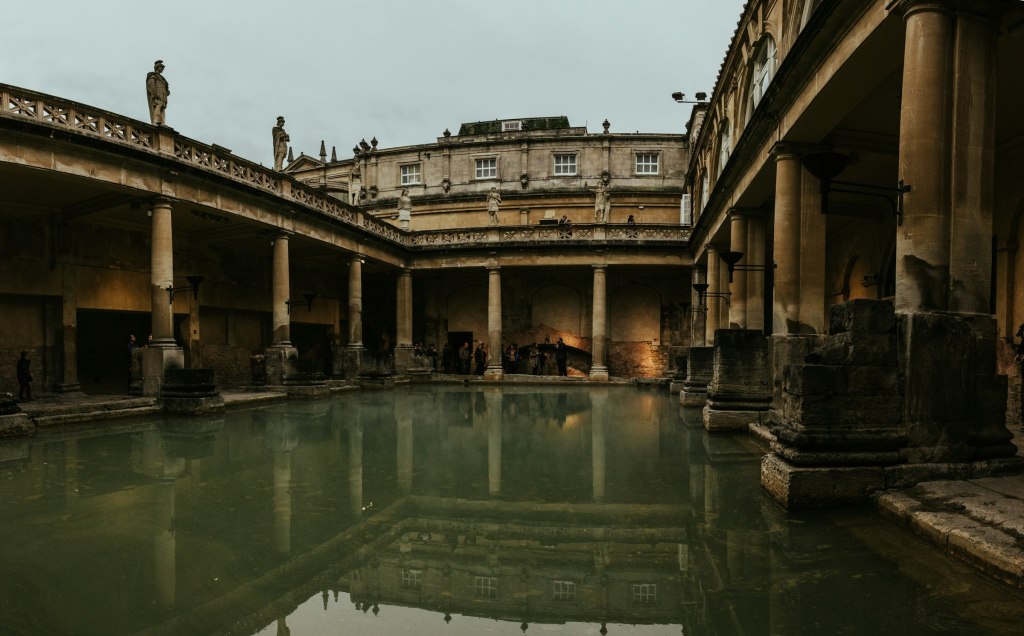
Bath has been built around warm water for a very long time. The springs that fed the Roman Baths still rise beneath the city, and at Thermae Bath Spa you can actually slip into that naturally warm, mineral-rich water yourself. This guide to Thermae Bath Spa covers how the experience works, what research does and doesn’t say about thermal bathing, and a few tips for making the most of a quiet afternoon in the water.
A Short History of Bathing in Bath
The original spa closed in 1978, and for nearly three decades the city’s famous water was something to look at rather than step into. Thermae Bath Spa opened in 2006, supported by National Lottery funding, and it describes itself as Britain’s only day spa fed by natural thermal water. The water comes from the same springs that supply the Roman Baths next door, and it is channeled into the spa’s baths at a comfortable temperature of about 33.5°C, or roughly 92°F.
A few steps away stands the Cross Bath, an open-air 18th-century bathing pool fed by its own spring. It can be reserved by small groups, which makes it a beautiful option for a private soak with friends.
Inside Thermae Bath Spa
The standard two-hour session, called the Thermae Welcome, gives you time to move slowly between warm water, steam and rest:
- The Minerva Bath, the largest thermal pool, on the lower floor, with massage jets and a gentle whirlpool current.
- The open-air rooftop pool, where the water looks out over the honey-colored rooftops and church towers of the city.
- A wellness suite with steam rooms, an infrared sauna and an ice room. One steam room nods to Roman architecture, while the Georgian steam room has windows onto a traditional garden.
- A relaxation room inspired by the night sky, honoring the astronomer William Herschel, who lived in Bath.
Treatments can be added on, and the spa has more than 20 treatment rooms. Spa sessions have traditionally been available on a walk-in basis while treatments are booked in advance, but arrangements can change, so check the current options before you go.
What the Research Suggests
Bathing in warm mineral water, often called balneotherapy, has a long history in European medicine, and researchers have studied it for decades. The picture is encouraging but modest. A Cochrane review of balneotherapy for osteoarthritis found that mineral baths might help with pain and quality of life compared with no treatment, while cautioning that the included trials were of limited methodological quality, so firm conclusions weren’t possible.
Other studies have looked at sleep, mood and general wellbeing after spa programs, often alongside exercise, with some promising signals and plenty of calls for better research. A fair reading is that warm-water bathing may support relaxation and comfort for many people, and that much of the benefit likely comes from the whole experience: warmth, buoyancy, unhurried time and a calm setting. It is best enjoyed as a restorative ritual rather than a treatment for any condition.
Tips for a Calm Visit
- Arrive early in the day. Morning sessions tend to feel quieter, and you’ll have more time in the rooftop pool.
- Go at twilight if you can. On a cool evening, steam drifts off the rooftop water as the city lights come on, and it is a lovely sight.
- Keep steam room visits short, around five minutes, and step out sooner if you feel too warm.
- Drink water between baths. Warm water and steam can be more dehydrating than they feel.
- Leave jewelry in your locker, since minerals in the water can affect some metals.
- If you are pregnant, managing a heart condition or blood pressure concern, or have any health questions, check with your clinician before using hot pools and steam rooms.
- Allow time afterward. A slow walk to the Royal Crescent or a cup of tea nearby keeps the calm going.
Making a Weekend of It
Bath rewards an unhurried pace. Pair your spa session with a morning at the Roman Baths, where you can see the ancient spring and its steaming green water, then wander the Georgian streets with no particular plan. Let the water set the rhythm: one long soak, a good dinner, an early night.
This article is general information, not medical advice; please consult a qualified clinician about your own health.


Leave a Reply