
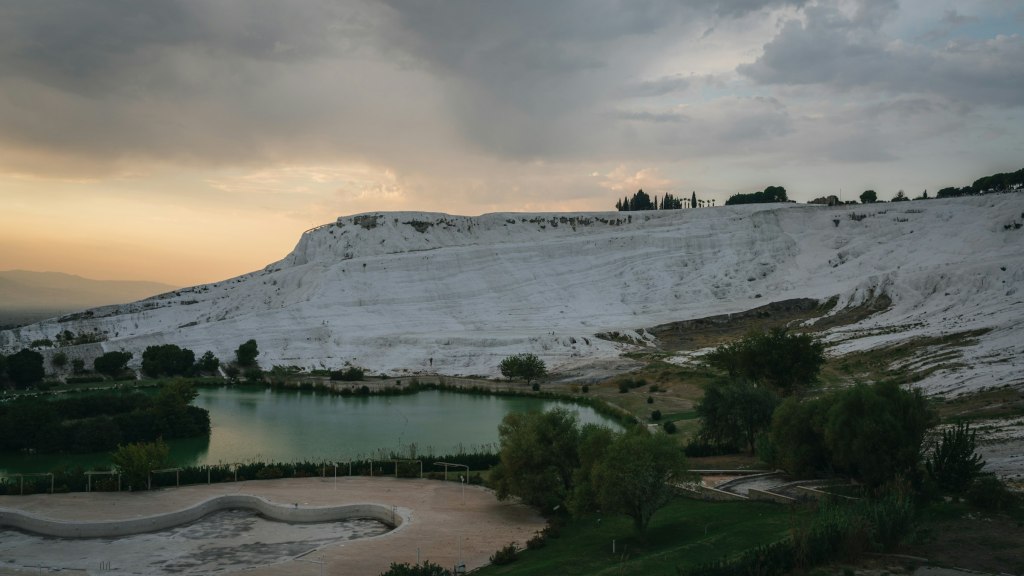
The thermal waters of Pamukkale have drawn bathers for more than two thousand years, and a soak among the white terraces remains one of Turkey’s most memorable wellness rituals. This guide looks at the place, at what warm mineral bathing may do for the body according to research so far, and at how to enjoy it with care.
A spa town older than most countries
Hierapolis was founded as a thermal spa in the early second century BC under the Seleucid Empire, and it grew into a renowned healing center. The city rose above a natural wonder: mineral-rich springs that deposit calcium carbonate and have built terraces roughly 2,700 meters long and 160 meters high. Hierapolis-Pamukkale joined the UNESCO World Heritage List in 1988.
The area has 17 hot springs, and their temperatures vary widely. That variety is part of what makes the region fascinating to a spa traveler.
Bathing in Cleopatra’s Pool
Visitors can bathe in designated thermal pools, including Cleopatra’s Pool, where ancient marble columns lie beneath the surface. Swimming among fallen antiquity is a rare sensation. Local authorities regulate the flow of water and occasionally close sections so the terraces can renew themselves, so it helps to plan your visit with a little flexibility.
What the research suggests about thermal bathing
Balneotherapy is the medical term for therapeutic bathing in mineral or thermal water. It has been studied in relation to joint and back discomfort, among other concerns. Some small trials report short-term improvements in comfort and movement, although the quality of studies varies and results are not the same for everyone.
Warmth itself relaxes muscles, and many people find it calming. It is sensible to think of a thermal soak as a pleasant complement to professional care, never a replacement for it.
Bathing well
A few gentle habits make the experience more comfortable. Keep soaks short at first and see how you feel. Drink water before and after. Step out slowly, since warm water can leave you light-headed when you stand.
If you have a heart condition, low blood pressure or are pregnant, it is a good idea to ask your clinician about hot bathing before you travel. Many travelers find it helpful to bring this up at a routine appointment.
Building a day around the waters
Pair the pools with the Hierapolis Archaeological Museum, which occupies the vaulted rooms of the old Roman baths and displays finds from Hierapolis and nearby towns. The Karahayıt hot springs, a short distance away, offer another setting for a soak.
To continue the theme in Istanbul, our guide to the hammam ritual describes the slow wash that Turkey has refined over centuries.
This article offers general information and is not medical advice. Please consult a qualified clinician about your own health.

