
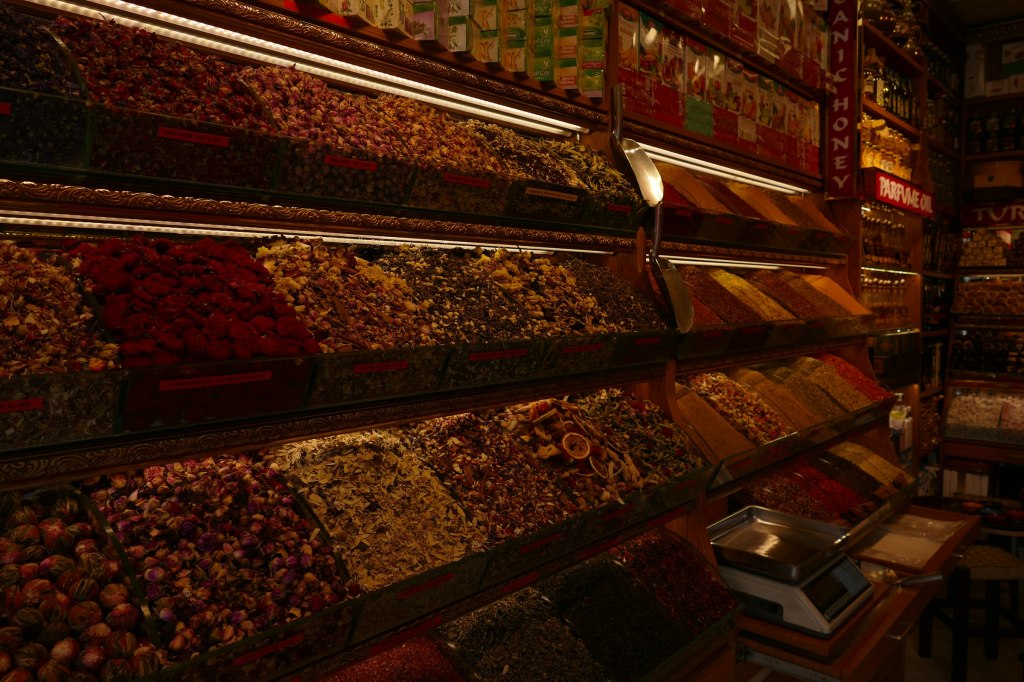
A spice bazaar introduces a city through the nose first. Istanbul’s Spice Bazaar, known in Turkish as Mısır Çarşısı, has been doing that since it was completed in 1664 beside the New Mosque in Eminönü. This guide to the Istanbul Spice Bazaar is written for the shopper who wants to bring home something worth keeping.
A short history of the Istanbul Spice Bazaar
The bazaar was built in the 1660s as part of the Yeni Cami complex, and its rents helped support the mosque. Its Turkish name means Egyptian Bazaar, a nod to the trade routes that carried spices through Cairo to the Ottoman capital. Today it’s an L-shaped covered market with roughly 85 shops, sitting at the southern end of the Galata Bridge beside the Golden Horn.
What to buy
- Saffron. Look at the threads and ask to smell them. Deep red and aromatic is the goal.
- Sumac and pul biber. The first is tart and bright, the second a gentle chili flake used across Turkish cooking.
- Mahleb. A fragrant spice made from cherry stones, often used in baking.
- Lokum, or Turkish delight. Rose and pistachio are classic, and vendors expect you to taste.
- Dried fruit and nuts. Figs, apricots and pistachios travel well and make lovely gifts.
- Tea and coffee. Turkish tea blends and finely ground coffee are easy to pack.
Reading the shelves
Stalls here tend to arrange goods in tall, colorful pyramids, and the display is half the pleasure. Spice mixes for kebabs, soups and rice dishes sit beside herbal teas, dried flowers and olive oil soaps. Shopkeepers are usually glad to explain what each one is for, so a simple question about how Turkish cooks use a spice often turns into a friendly, useful lesson.
How to shop it well
Walk the full length once before you buy anything. Compare. Prices, quality and packaging vary from stall to stall, and a slow first lap pays off. Ask to sample sweets and dried fruit. Buy modest amounts so the flavors stay vivid, and ask whether the shop can seal your purchase for travel.
Entry is free, and the easiest way to arrive is the T1 tram to Eminönü. Hours run from morning to early evening and can change on holidays, so check before you go.
Make it a half day
The Rüstem Pasha Mosque is a short walk away and is known for its Iznik tiles. The Galata Bridge offers waterfront views, and ferries leave from the nearby piers for a Golden Horn cruise. For a quieter contrast after the bazaar’s energy, take a look at our guide to shopping in Nişantaşı.
Come hungry, come early, and leave room in your bag. A small jar of saffron and a box of lokum will carry the smell of Eminönü all the way home.

