
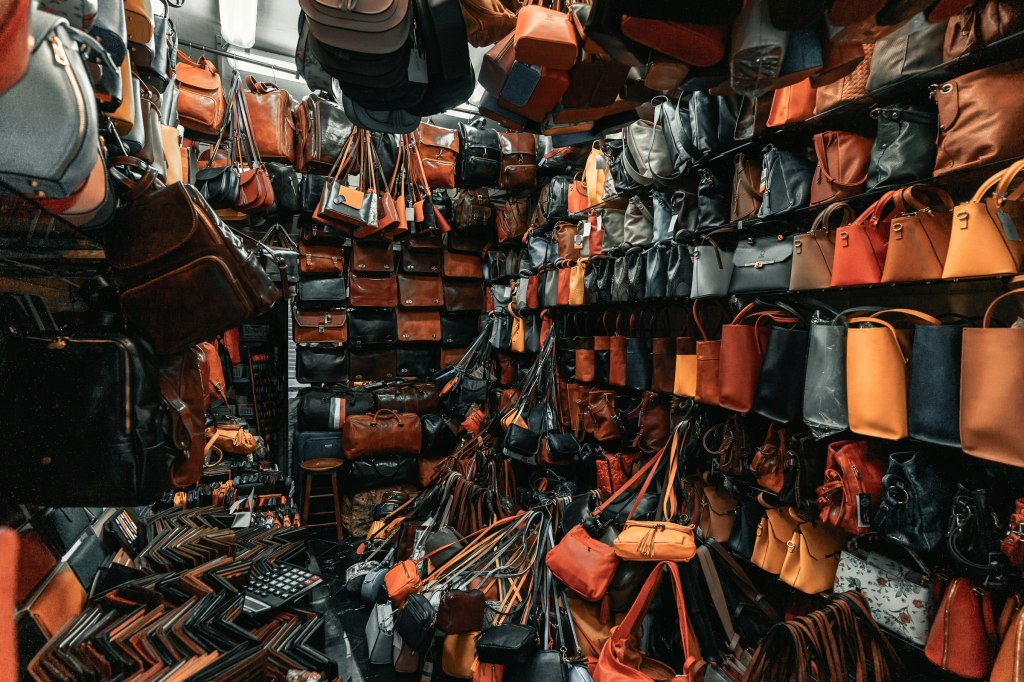
Florence leather is less a souvenir category than a living craft, and the city makes it easy to see the work up close. This guide links a leather school, a shoe museum and a handful of quiet ateliers into one day of looking, touching and, if the mood strikes, buying something you’ll carry for decades.
Start with Florence leather at Scuola del Cuoio
The Leather School of Florence occupies part of the convent beside the Basilica di Santa Croce. Through a large window you can watch artisans cut, stitch and finish. The scent of leather and wax carries through the rooms. It’s a gentle introduction, and a good place to pick up a wallet or small piece before moving on.
Ferragamo on Piazza Santa Trinita
Salvatore Ferragamo’s flagship stands at Palazzo Spini Feroni, and the building doubles as a small museum of shoe history. Even if you buy nothing, the sculptural lasts and wedge soles tell a story of Italian ingenuity. Nearby, Via Tornabuoni gathers Gucci, Ferragamo and Bulgari along one elegant street.
Across the Arno: the Oltrarno ateliers
Cross the river and the pace slows. The streets around Via Maggio and Santo Spirito hold working leather ateliers, bookbinders and furniture restorers. This is Florence at its most workmanlike, and its most charming. Doors are often open, and a polite hello is usually welcome.
Two addresses are worth marking. Madova, at Via Guicciardini 1r near Ponte Vecchio, has made gloves since 1919, and trying a pair is a small ritual in itself. Casini Firenze, at Piazza de’ Pitti 30 opposite Palazzo Pitti, is a leather fashion house with a polished eye.
Two more names for the notebook
Il Bisonte, at Via del Parione 31r, works in vegetable-tanned leather that deepens in color and develops a patina with age. Cellerini, at Via del Sole 9r, makes bespoke bags and luggage to order, for the traveler who knows exactly what they want. Both reward a slow visit.
Choosing well
Pick the piece up. Feel the weight, look at the stitching, ask how the leather was tanned. The San Lorenzo market is lively and offers great choice, and a good eye for finish pays off there. Morning is the best time for workshops, when the light is clear and the artisans are at their benches. Leave room in your suitcase, and in your afternoon, for a coffee in Piazza Santo Spirito before you head back across the river.

