
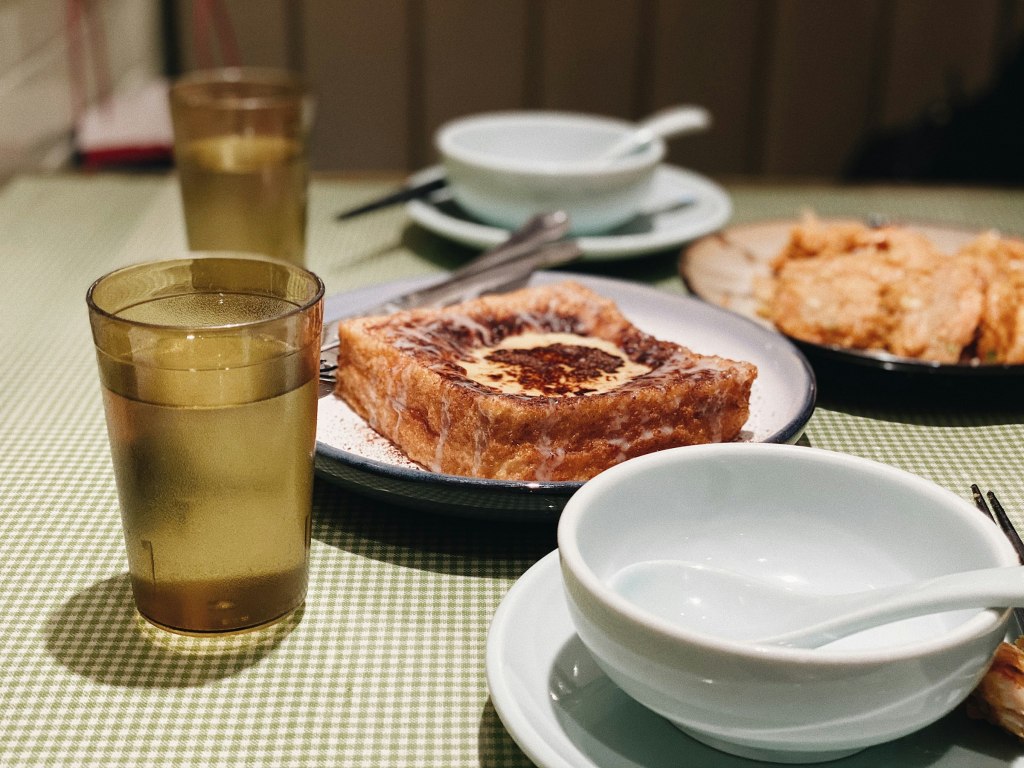
A cha chaan teng, literally a tea restaurant, is Hong Kong at its most easygoing: a glass of milk tea, a buttered bun, a table by the window. This guide to cha chaan teng in Hong Kong gives you five classic stops, each with one thing you shouldn’t miss.
A short history of the cha chaan teng
These cafes began in the 1950s as bing sutts, or ice rooms, selling cold drinks to workers cooling off under ceiling fans. Menus were short at first. Over time they grew into full diners that blend Hong Kong and Western flavors, which is why you’ll find macaroni, scrambled eggs and French toast sharing a menu with milk tea.
That mix is the charm. A morning set might bring eggs, toast and a hot drink on one tray. An afternoon visit might mean a bun and an iced tea. The rhythm of the room, with its quick orders and easy conversation, is as much a part of the experience as the food.
Five cha chaan teng to try in Hong Kong
- Lan Fong Yuen, Central. On Gage Street, this one began as a dai pai dong, an open-air food stall. It’s known for silk stocking milk tea, strained through a sackcloth bag and finished with condensed milk, served hot or iced.
- Mido Cafe, Yau Ma Tei. A 1950s-era room with stained-glass windows and wooden booths, which has appeared in films. Order the thick-sliced Hong Kong-style French toast with butter and condensed milk.
- Kam Wah Cafe, Kowloon. Family-owned since 1973 and loved for its pineapple buns served with a slab of butter. Egg tarts and French toast are on the menu too.
- Australia Dairy Company, Jordan. Famous for fluffy scrambled eggs on thick buttered toast, with macaroni on the side. The steamed milk and custard desserts round out a light, comforting meal.
- Cheung Hing Coffee Shop, Happy Valley. A rustic spot of about 70 years, noted for egg tarts and pineapple buns, and for fried noodles with luncheon meat.
How to order like a regular
Seating is often shared, and service is quick and friendly. Point, smile, and say what you’d like. The pineapple bun, by the way, contains no pineapple; the name comes from the sugary, golden crust that resembles its skin. Eat it warm, with the butter melting in.
Go before the lunch rush for the most relaxed table, and expect hours and menus to vary by location. If you’re sampling more than one cafe in a day, share plates and order small. A single bun and a cup of tea at each stop makes a delicious, unhurried tour, and it leaves room for dinner.
Pair it with more of Hong Kong’s tables
For a grander cup, our guide to afternoon tea in Hong Kong moves from tea-cafe comfort to The Peninsula’s lobby. And for the city’s other great morning ritual, see dim sum in Hong Kong.

