
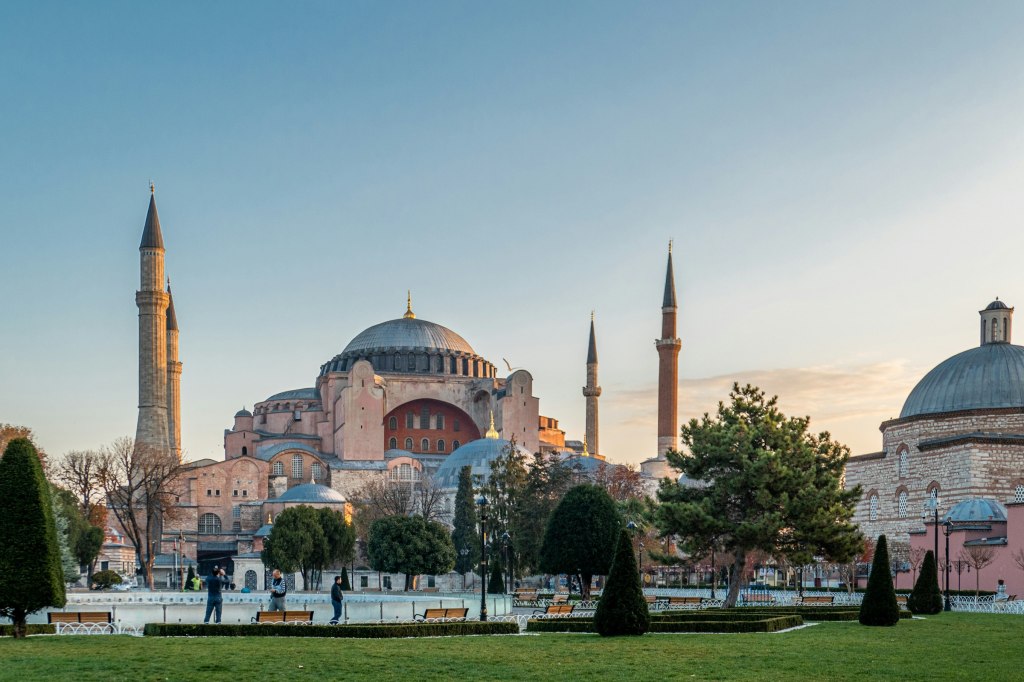
A morning in Sultanahmet can hold three of Istanbul’s great interiors without a taxi between them. Hagia Sophia, the Basilica Cistern and the Blue Mosque stand within an easy walk of one another, and a little sequencing keeps the hours unhurried.
Plan your morning in Sultanahmet
Start early. The mosques close to visitors during the five daily prayers, and Friday midday prayers shorten visiting hours, so check current times before you set out. Cover your shoulders and knees, and carry a light scarf. Free scarves are available at the Blue Mosque entrance, and shoes come off at the door.
Keep the pace gentle. Three major sights in one morning is generous, and the district’s cobbled lanes, tea gardens and carpet shops make easy pauses between them. Wear shoes you can slip off.
Around 9:00, Hagia Sophia
Completed in 537 under Emperor Justinian, Hagia Sophia was the largest enclosed space on Earth for nearly a thousand years. It has served as a Byzantine cathedral, an Ottoman mosque, a museum and, again, a working mosque. Stand beneath the dome and it seems to float. Visitors follow an upper-gallery route separate from worshippers, where Byzantine mosaics, including the Deesis, glow in the light. Allow sixty to ninety minutes.
Late morning, the Basilica Cistern
Built in the sixth century to store water for the Great Palace of Constantinople, the cistern is a cool, hushed forest of 336 columns rising from shallow, carefully lit water. Look for the Medusa-head column bases. Lines tend to be longest from late morning to early afternoon, so book ahead where possible. Plan on about forty-five minutes, and wear comfortable shoes, since there are stairs and uneven surfaces.
Between the two, the Hippodrome
Sultanahmet Square was once the sporting and political heart of Byzantine Constantinople, where chariot races drew great crowds. The Obelisk of Theodosius, the Serpent Column and the Walled Obelisk still stand. It’s free, always open and takes fifteen to twenty minutes. A perfect place to pause.
Midday, the Blue Mosque
Built in the early seventeenth century, the Sultan Ahmed Mosque takes its nickname from more than 20,000 handmade Iznik tiles that give the interior its blue glow. Entry is free because it is an active place of worship, and it closes to visitors at prayer times. If the doors are shut when you arrive, have tea nearby and return after prayers. Mid-afternoon is often quieter than the morning. Plan thirty to forty-five minutes.
What comes next
Topkapi Palace is right nearby and makes a rich afternoon, though it is closed on Tuesdays. For where to eat, which ferries to catch and how to shape the rest of your days, our Istanbul travel guide for 2026 picks up where this morning leaves off.

