
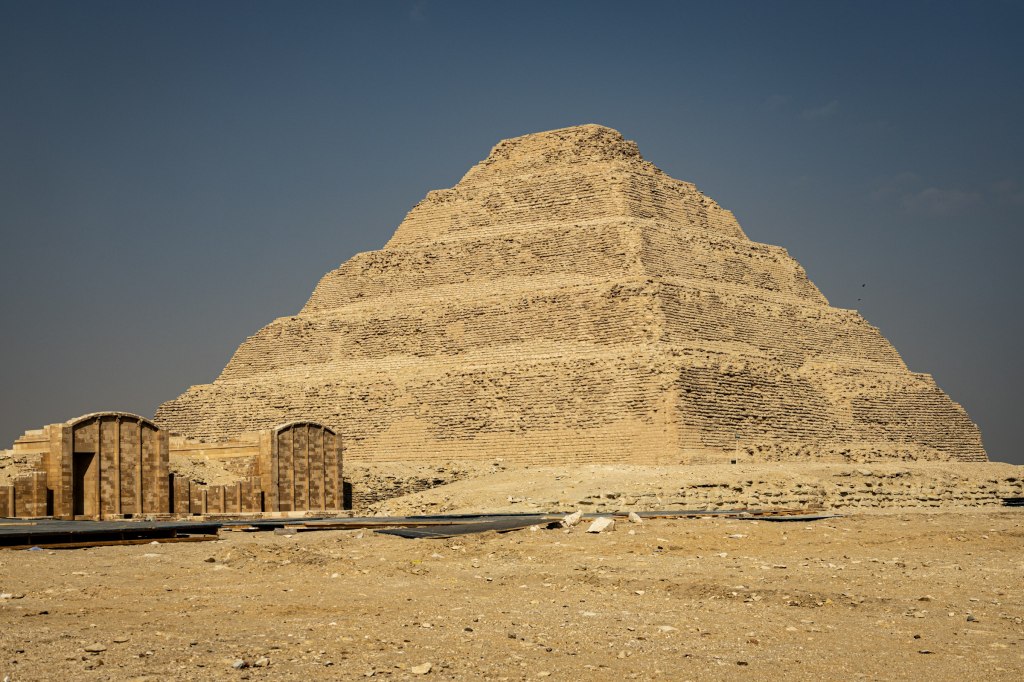
A day at Saqqara offers the pyramid lover something different from Giza: space, silence and a feeling of beginnings. About 30 kilometers south of central Cairo, this vast necropolis holds the Step Pyramid of Djoser, painted tombs of the Old Kingdom and a plateau where the wind is often the loudest sound.
Why a day at Saqqara suits the unhurried traveler
The drive from Cairo takes roughly an hour. There is no public transport to the site, so most visitors arrange a private driver or a guide, which also brings the context that makes the tombs come alive. Go early. The light is soft, the sand is cooler and the plateau is yours for a while. A hat, sunglasses and plenty of water are worth packing.
Think of the day in three movements: the pyramid in the morning light, a painted tomb in the shade, then a slow lunch before the road back. Nothing needs rushing.
The Step Pyramid of Djoser
Built around 2650 BC for the Third Dynasty pharaoh Djoser, this limestone monument rises about 62 meters in stepped tiers and stands among the earliest great stone structures ever raised. Imhotep is credited as its probable architect, and he was later revered as a god. The site has been a UNESCO World Heritage property since 1979, and after a long restoration the pyramid reopened to visitors in March 2020.
Walk in slowly. The entrance colonnade, with columns carved to look like bundled plant stems, leads to a courtyard of smaller temples inside a fine enclosure wall of Tura limestone. It’s a place that rewards looking up, then looking closely. Notice how the pale stone changes color as the sun climbs, from honey to bone.
Mereruka’s tomb
Mereruka served as vizier to Teti, founder of the Sixth Dynasty, and his mastaba is the largest of its kind at Saqqara, with 33 rooms. Its walls carry everyday life in careful relief: hunters in the marshes, fishermen at work, jewelers bent over their craft. Stand in a doorway and the whole world of the Old Kingdom seems to move around you. It’s among the most human places in Egypt.
A good guide will point out small details, such as the posture of a craftsman or the patience of a fisherman, that are easy to miss alone. Give yourself time here. The rooms are cool, quiet and absorbing.
Beyond the pyramid
The Serapeum was the burial place of the Apis bulls, regarded as living forms of the god Ptah, and an avenue of about 600 sphinxes once led toward it. It is not always open, so ask your guide before you plan around it. The pyramids at Dahshur lie not far away, and many travelers pair Saqqara with Dahshur or with Giza on a longer day, returning to Cairo by late afternoon with sand on their shoes and a quieter mind.
Opening hours and which tombs are open can change, so it helps to confirm the plan with your driver the day before. Pack a light layer for the shaded interiors, and keep a small amount of cash for tips and refreshments.

