
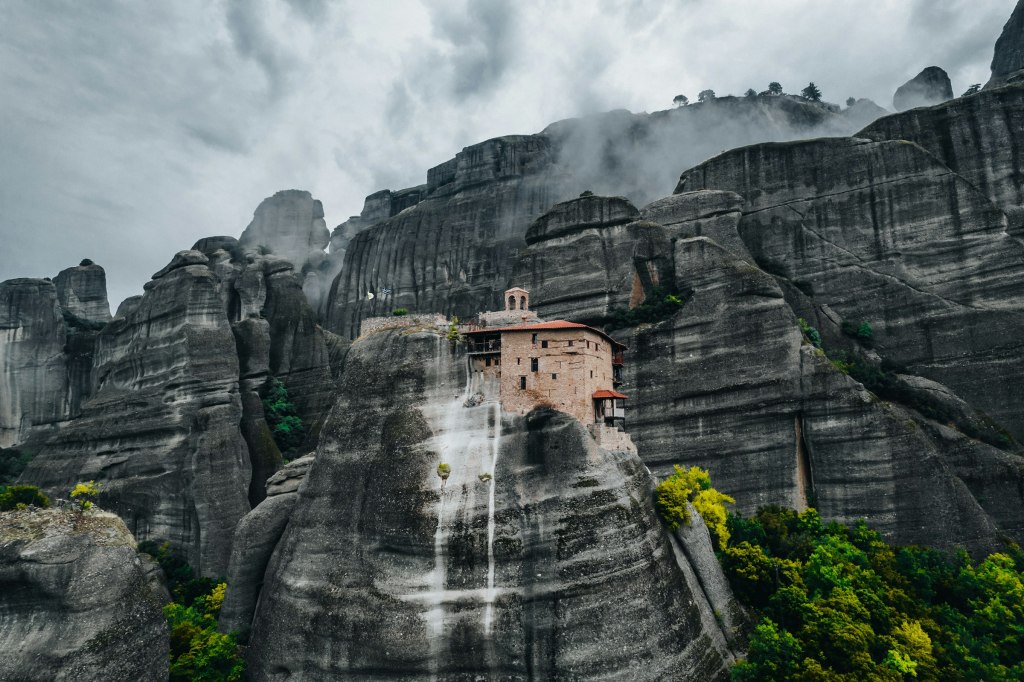
A day at Meteora is a day spent looking up. Six working monasteries crown pillars of sandstone above the towns of Kalambaka and Kastraki in central Greece, and the whole complex is a UNESCO World Heritage site. This plan fits the best of it into one unhurried day, with notes on dress, timing and where to watch the light change.
Meteora monasteries: what to know before you go
There were once more than twenty monasteries here. Six are open to visitors today. Great Meteoron is the oldest and largest. Varlaam, founded in the mid-fourteenth century, faces it across a gap. Roussanou, a convent dedicated to Saint Barbara, dates from the sixteenth century and has one of the most photogenic terraces. Holy Trinity stands on a single pillar of its own. St. Nicholas Anapafsas, the first you reach driving up from Kastraki, is small and rich in frescoes. St. Stephen, also a convent, is linked to the road by a short bridge and has lovely herb gardens.
Each monastery keeps its own hours and closing day, and these shift between summer and winter. Check current times before you plan, then build the day around two or three rather than all six. Entry is a few euros each.
Dress code and etiquette
Shoulders and knees should be covered, so wear long trousers or a skirt and bring a light layer. Many monasteries offer wraps at the entrance if you’d like one. Rules on photography inside the chapels are strict, so plan to simply look and take in the frescoes.
A day at Meteora, hour by hour
Morning. Start with Great Meteoron and Varlaam, which sit close together. Great Meteoron involves a few hundred steps, and its museum rooms and manuscripts reward the climb. Arrive when the doors open and you’ll have the cool light and quiet corridors to yourself.
Midday. Lunch in a Kastraki taverna, with the rocks filling the windows. Kalambaka, the larger of the two towns, has plenty of choices as well.
Afternoon. Save Roussanou for later: its terrace looks across to Varlaam and Holy Trinity. If energy remains, climb to Holy Trinity, about 150 steps, or visit St. Stephen, the easiest of the six to reach.
Evening. The roadside viewpoint between Great Meteoron and Roussanou offers a sweeping arc of pillars, and Psaropetra, near Holy Trinity, is another favorite for golden hour. Bring a jacket, because the air cools quickly after sunset.
Where to stay near Meteora
Kastraki, the smaller village, sits closest to the rocks, and many rooms look straight up at them. Kalambaka has more restaurants and the train station. Names that travel writers often recommend include Hotel Doupiani House in Kastraki and Divani Meteora in Kalambaka. A night on either side gives you both sunrise and sunset.
Spring and autumn are especially pleasant for walking. With a second day you can follow the old paths between the pillars, where hermits once lived in the caves.

