
Aswan is where the Nile slows down, and the pace of the city follows. This plan for 48 hours in Aswan gives you a temple on an island, a granite quarry with an obelisk that was never finished, a Nubian village, and a felucca ride when the light turns gold.
48 hours in Aswan, day one: temples and stone
Start at Philae. Boats leave from the marina on the mainland and cross to the island in about ten minutes, and that short ride is part of the charm. The temple was built mostly in the Ptolemaic period and honored Isis, with Osiris and Hathor also worshipped here. After the early twentieth century dam raised the water and flooded the island, the complex was moved, with UNESCO’s help in the 1960s, to nearby Agilkia Island. Go early. The stone is cool, the river is quiet, and the reliefs read clearly in morning light.
Next, the Unfinished Obelisk. Hatshepsut ordered it, and at roughly 42 meters it would have been the largest obelisk ever raised. It cracked during excavation and was left where it lay. That is the gift of the place: you can see exactly how ancient stoneworkers worked.
Spend the afternoon at the Nubian Museum, a relatively new museum devoted to Nubian culture and history. It gives the next day’s village visit its context.
Evening belongs to the Old Cataract. Built in 1899, the hotel is where Agatha Christie wrote part of Death on the Nile. Policies on non-guest visits can change, so confirm with the hotel before you go, then settle into a terrace seat above the river. Our piece on the Old Cataract above the first cataract has more on the hotel.
Day two: Elephantine, Nubian hospitality and the river
Begin on Elephantine Island, where feluccas circle and the pace is gentle. Cross by boat, wander, and take your time.
The Nubian village is small and easy to walk through, and visitors are often invited into homes for tea. It’s a warm, personal hour. Bring a little curiosity and a camera you ask before using.
If you have the energy, the Aswan High Dam lies about 16 kilometers south, a 30-minute drive. Built in the 1960s, it created Lake Nasser and prompted the relocation of several temples, Philae’s story among them. The history is richer than the view, so read up before you go.
Sunset by felucca
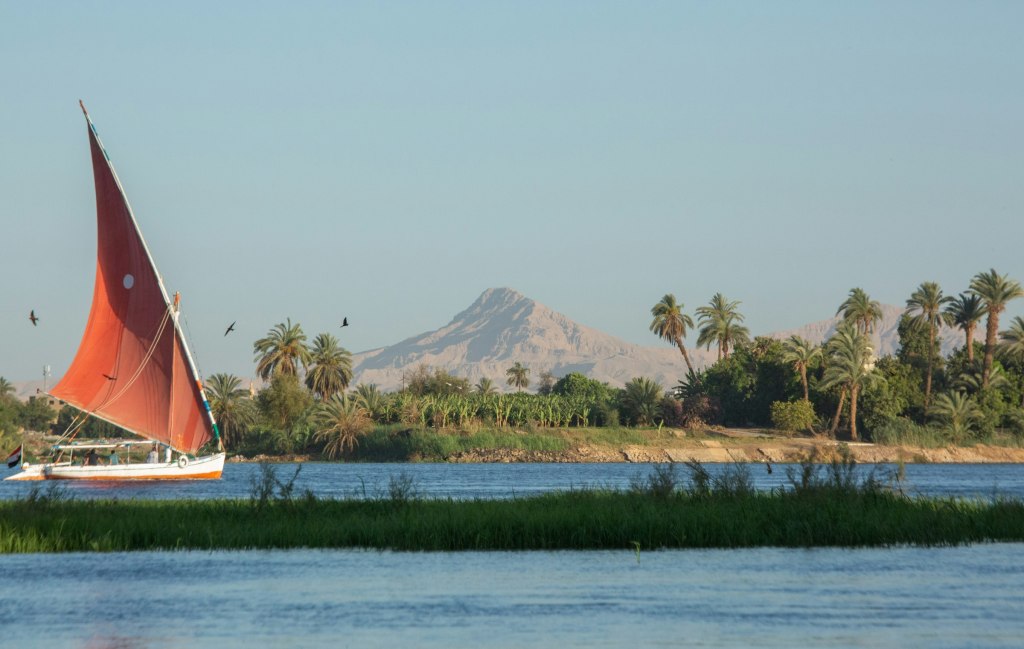
Save the felucca for last. These white-sailed boats have crossed the Nile for centuries, and an hour on the water at sunset is the best way to close your 48 hours in Aswan. Agree the price and the route with the captain before you board, then lean back. The wind does the rest.
Plan for the cooler months if you can. Mornings are pleasant, afternoons are kind to a slow walk, and the river is at its most golden.

