
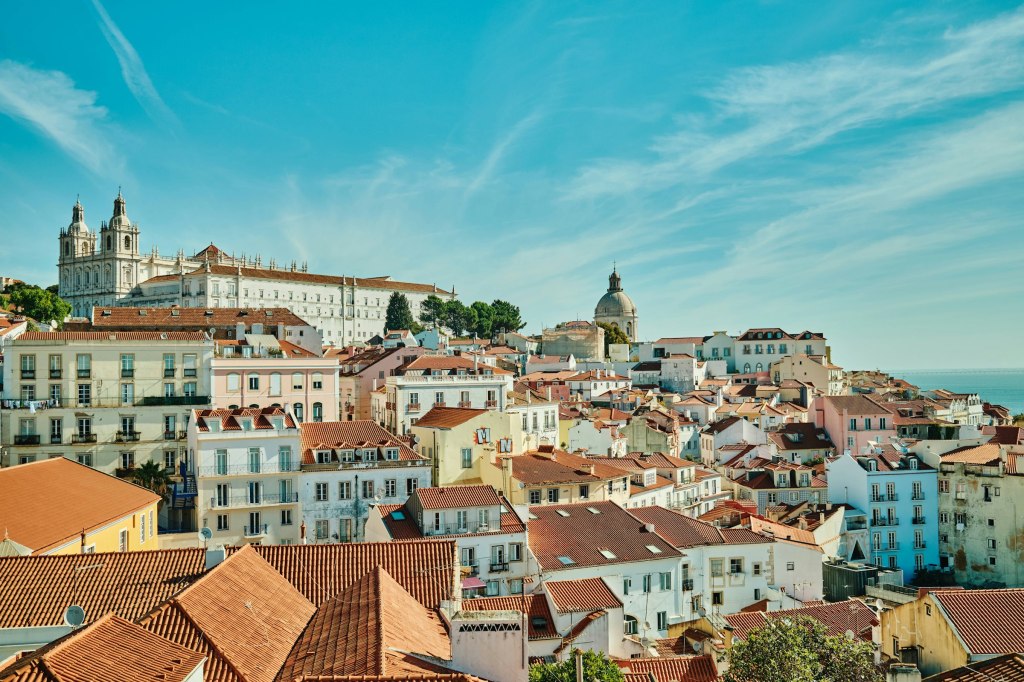
This Lisbon city guide gathers what you need to plan a considered stay: the neighborhoods worth sleeping in, hotels at every budget, the tables and pastry counters locals return to, and the real costs of getting around. Lisbon rewards slow walking. Hills tilt toward a wide river, trams rattle past tiled facades, and the light turns the limestone pavements a soft gold by late afternoon.
Prices last updated October 2026. Rates move with season and exchange rates, so treat every figure here as a planning guide and let official sites and venues have the final word. Euro amounts are converted at roughly €1 = US$1.12.
Lisbon city guide at a glance
- Currency: euro (€). €10 is about US$11.20.
- Language: Portuguese. English is widely spoken in hotels, restaurants and shops.
- Plug: Type C and F, 230V.
- Time zone: Western European Time (UTC+0, one hour ahead in summer).
- Airport: Humberto Delgado, about 7 km from the center. The metro Red Line runs into town for roughly €2 (about $2.10). A taxi to Baixa or Chiado is about €15 to €20 by day (about $17 to $22), and Uber or Bolt is usually about €12 to €18 off-peak. Agree the fare or use an app for a fixed price.
- Best months: March to May and September to October.
When to go
Spring and early autumn suit Lisbon best. March sits around 18°C (64°F), May brings warm afternoons and a lively calendar of film and jazz, and September holds onto summer heat at about 27°C (80°F) with calmer streets. October is gentler still, with the occasional rainy day worth a museum visit.
June is festival season. The Popular Saints celebrations turn Alfama and Mouraria into street parties of grilled sardines and paper garlands, and hotel rates rise accordingly. July and August are the hottest months, so carry water and plan sightseeing for the morning. Winter is mild and wet, quietest in January, and the best time for lower room rates.
Where to stay
Choose a neighborhood first, then a bed.
Chiado and Bairro Alto suit first-time visitors, with bookshops, theaters and evening bars within a few minutes’ walk. Príncipe Real is the polished, leafy district of concept stores and garden terraces. Alfama is the oldest quarter, all lanes and fado, best for travelers who enjoy a climb. Baixa is flat and central, handy for trains and the riverfront square of Praça do Comércio. Belém, to the west, is calmer and close to the great monuments.
- Four Seasons Hotel Ritz Lisbon (Avenida da Liberdade): the grand address, with park views. Roughly €650 in low season to €1,500 or more at peak (about $730 to $1,680).
- Bairro Alto Hotel (Praça de Camões): a refined Chiado base with a rooftop bar. About €350 to €900 by season ($390 to $1,000).
- Memmo Príncipe Real: a design-led hotel with a pool terrace over the city. From about €250 to €380 ($280 to $425).
- Pestana Palace (near Belém): a nineteenth-century palace in its own gardens. From about €200 ($225).
- AlmaLusa Baixa/Chiado: a polished mid-range choice near Praça do Comércio. From about €185 ($207).
- Hotel Inn Rossio and Residencial Florescente (Baixa): comfortable, central budget stays from about €70 to €90 ($80 to $100).
Where to eat and drink
Start with the small things. A coffee (bica) costs about €1 and a pastel de nata about €1.30 to €1.80. The custard tarts at Pastéis de Belém, made by hand from a closely held recipe, have two entrances: one for takeaway and one for sitting down. Manteigaria in Bairro Alto sells warm tarts for about €1.50 each, standing up.
Lunch is the best value of the day. Look for a prato do dia (plate of the day) at a neighborhood tasca, usually €8.50 to €15 per person with soup and a drink in many places. Order bacalhau in any of its many forms, a pork or beef bifana sandwich, or grilled fish with olive oil and potatoes. A small glass of ginjinha, the sour-cherry liqueur, is a Lisbon ritual worth a few euros.
For a long seafood dinner, Cervejaria Ramiro is the classic, about €50 to €60 per person, and it asks for a deposit when you reserve. O Velho Eurico in Mouraria cooks creative classics for around €20 to €25 per person and fills up about a month ahead. Prado, near the Sé, serves farm-to-table plates at about €40 to €60 per person. Time Out Mercado da Ribeira, in Cais do Sodré, gathers dozens of stalls with dishes at about €5 to €10.
At the top, Belcanto in Chiado holds two Michelin stars, with a tasting menu from roughly €185 per person ($207). Book well ahead. Our guide to fine dining in Lisbon covers six tables in more detail.
A typical three-course dinner with wine runs €25 to €35 per person at a neighborhood restaurant, and a half-liter draft beer is about €2.50 to €4. Tipping is never required. Rounding up or leaving 5 to 10 percent for good service is warmly received.
What to see
Lisbon’s headline sights are a short tram or train ride apart.
- Jerónimos Monastery (Belém): the late-Gothic Manueline cloister is the masterpiece. Entry is €18 for adults (about $20), €9 for ages 13 to 24 and 65 and over, and free for children under 13. The adjoining church is free. Open Tuesday to Sunday, closed Mondays.
- Belém Tower: a small riverside fortress from the sixteenth century. About €8 for adults ($9); a combined Belém ticket is listed at about €21. Open Tuesday to Sunday, so check the official site for current visiting arrangements.
- São Jorge Castle: ramparts and the best early view across the rooftops. €17 for adults (about $19).
- Fado Museum (Alfama): the story of Portugal’s signature song, about €5.
- Azulejos: the glazed tiles lining stations, churches and palaces are a study in themselves. Our azulejo guide maps the best of them.
Evening belongs to the viewpoints. Climb to Miradouro de Santa Luzia in Alfama or São Pedro de Alcântara in Bairro Alto with a glass of something cold.
A short itinerary
Day one: Baixa and Alfama. Walk Praça do Comércio at breakfast, take the lanes uphill to São Jorge Castle, lunch at a tasca, and settle into a fado evening (about €15 to €25 for a show only, or €35 to €80 with dinner). Arrive early, since small houses fill fast.
Day two: Belém. Ride tram 15 or the train west. Visit the monastery in the morning, taste the tarts, then walk the river to the tower. Return for sunset on a Bairro Alto terrace.
Day three: Sintra. Trains leave Rossio about every 20 minutes and reach Sintra in around 40 minutes for €2.55 each way (about $2.85). Our day in Sintra plan fits Pena Palace and Quinta da Regaleira into a single unhurried day. Prefer something quieter? The Tagus ferry to Cacilhas costs about €2 and rewards you with riverside seafood.
Getting around
Lisbon is a walking city with excellent public transport.
- Single metro, bus or tram ticket: about €1.90, using a reusable Navegante card (about €0.50). Contactless bank cards are also accepted at metro gates.
- Zapping credit: about €1.72 per ride once loaded.
- 24-hour pass for metro, bus and trams: about €7 to €7.25 ($8).
- Historic tram 28, paid on board: about €3.30. It is included in the 24-hour pass. Ride early in the morning for the most space.
- Lisboa Card: about €31 for 24 hours, €51 for 48 hours and €62 for 72 hours, with transport and entry to many monuments. It pays off when you visit several included sites a day.
- Taxi: the meter starts at about €3.65 by day, and a typical city trip is €7 to €12. Ride-hailing for a 15-minute trip is often €6 to €10.
Wear flat, grippy shoes. The calçada pavements are beautiful and polished smooth by centuries of footsteps.
Shopping and craft
Chiado and Príncipe Real hold the city’s best small shops, from tile studios to sardine-tin souvenirs. For heritage soap, perfume and design, follow our route through Lisbon fashion and fragrance. Cork accessories, hand-painted ceramics and canned fish in graphic wrappers all pack easily.
Day trips
Besides Sintra, Cascais is a seaside town 30 to 40 minutes by train from Cais do Sodré, with beaches and a harbor promenade. Porto is about three hours north by fast train, and our 48 hours in Porto shows how to enjoy it. For wine, the Setúbal peninsula is an easy drive south.
Practical notes
- Entry: visitors from the United States, United Kingdom, Canada and Australia can generally stay up to 90 days in any 180 in the Schengen area without a visa. Europe is introducing digital entry checks and an authorization scheme, so confirm the current requirements before you fly.
- Tourist tax: about €4 per person per night in many Lisbon hotels, added at checkout.
- SIM and eSIM: prepaid SIM cards from MEO, Vodafone or NOS typically cost about €10 to €30, and you will need your passport to register. Travel eSIM plans vary by data and days, so compare before you land.
- Dress: easy and smart. Cover shoulders and knees when entering churches and the monastery.
- Reservations: book Belcanto, Ramiro and popular tascas ahead, particularly on weekends.
Price guide, per person per day
| Style | Budget | Comfortable | Luxury |
|---|---|---|---|
| Room (twin share, per person) | €35 to €55 | €90 to €140 | €225 to €500+ |
| Food and drink | €30 to €45 | €60 to €100 | €150 to €300 |
| Local transport | €2 to €7 | €5 to €20 | €20 to €60 |
| Sights and fado | €10 to €20 | €15 to €35 | €20 to €50 |
| Typical daily total | About €80 to €125 ($90 to $140) | About €170 to €295 ($190 to $330) | From about €415 ($465) |
Prices last updated October 2026. Rates change with season, events and exchange rates, so confirm with hotels, venues and official ticket pages before you travel.
Insider tips
Eat dinner late, after 8 p.m., as locals do. Order the couvert (bread, butter and olives) only if you want it, since it is charged per item. Walk Alfama downhill, starting from the castle. Visit Belém on a weekday morning for the calmest cloister. Carry a few coins for kiosk coffees. And save an hour at golden hour for any miradouro, with a small glass of ginjinha in hand.

