
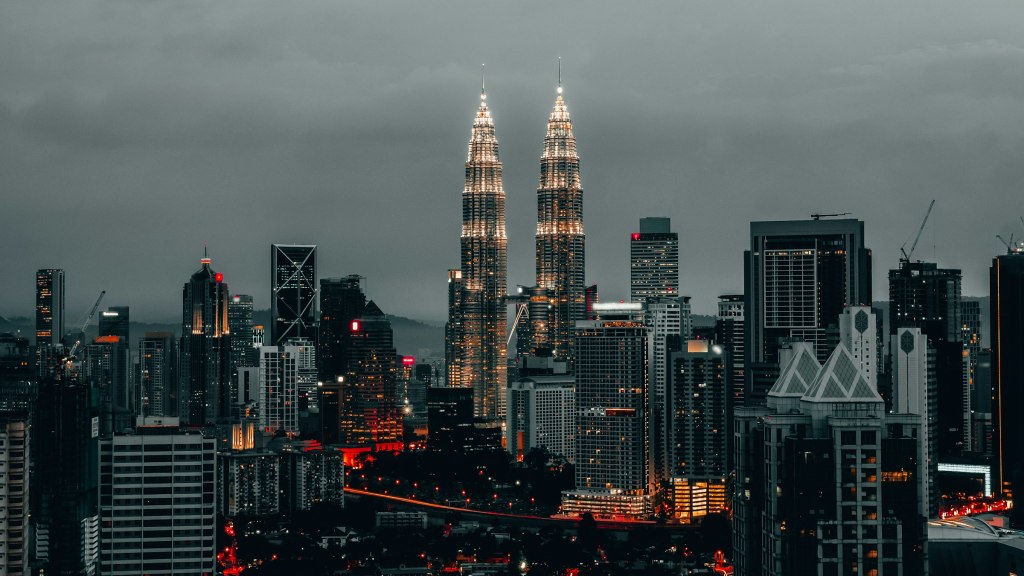
This Kuala Lumpur city guide is built for travelers who want the polished version of the city without losing its appetite: where to sleep, which tables to book, what to see in two or three days, and what it all costs. Malaysia’s capital rewards a slow pace. Mornings belong to temples and markets, afternoons to air-conditioned galleries, and evenings to the smoke and sizzle of a hawker street.
Prices last updated October 2026. Prices are quoted in Malaysian ringgit (RM) with a US dollar approximation at about RM4.08 to US$1. Rates move with the season and the exchange rate, so treat every figure as a guide and let the official websites have the final word.
Kuala Lumpur city guide: quick facts
- Currency: Malaysian ringgit (RM). About RM4.08 per US$1.
- Languages: Bahasa Malaysia is official, and English is widely spoken, along with Mandarin, Cantonese and Tamil.
- Plug type: Type G, 240V.
- Time zone: UTC+8.
- Airport: Kuala Lumpur International (KLIA), about 28 minutes from KL Sentral by KLIA Ekspres.
- Best months: May to July for the drier weather, though the city is lovely year-round.
When to go
Kuala Lumpur is warm all year, with daytime highs of roughly 29 to 35°C and humid evenings. May to July tends to be the most settled stretch. Showers are more frequent from October to January, and they usually arrive as dramatic afternoon downpours that clear within the hour. Pack a small umbrella, schedule outdoor sights for the morning, and the rain becomes a pleasant excuse for a long lunch.
Where to stay
Choose a neighborhood first. KLCC puts you beside the Petronas Towers, the park and the best malls, and the train is a short walk away. Bukit Bintang is the city’s shopping and dining quarter, with Jalan Alor on the doorstep. Bangsar and Brickfields suit those who like cafés, boutiques and a more residential rhythm. Chow Kit and Chinatown offer an everyday, local atmosphere within reach of the monorail.
- Four Seasons Hotel Kuala Lumpur (KLCC): top luxury, with rates that typically run about US$220 to US$450 (RM900 to RM1,850) per night.
- Mandarin Oriental, Kuala Lumpur (KLCC): a garden-facing classic beside KLCC Park, with an infinity pool and Towers views. Expect about US$150 to US$280 (RM610 to RM1,150) most nights.
- The Majestic Hotel Kuala Lumpur, Autograph Collection: a restored colonial-era grand hotel near the railway station. Typically about US$107 to US$180 (RM440 to RM735), with suites higher.
- Alila Bangsar: contemporary design, a pool and two restaurants. From about US$80 to US$130 (RM330 to RM530).
- Hotel Stripes Kuala Lumpur, Autograph Collection (Chow Kit): a rooftop pool and a short walk to the Bukit Nanas monorail station. About US$80 to US$130 (RM330 to RM530).
- Budget: hostel dorms and capsule rooms in Chinatown start near RM40 to RM60 (about US$10 to US$15), and simple private rooms run RM80 to RM180.
Where to eat and drink
Start with breakfast. A kopitiam (traditional coffee shop) serves toast with kaya, soft eggs and strong kopi for RM5 to RM12 (US$1.20 to US$3). Roti canai at a mamak stall is RM1.50 to RM2.50, and teh tarik, the pulled milk tea, is RM2 to RM4. Nasi lemak, coconut rice with sambal, runs RM3 to RM12 depending on the extras, and Nasi Lemak Wanjo in Kampung Baru is a local favorite.
For lunch, think hawker plates at RM8 to RM15 (about US$2 to US$3.70). Brickfields is the place for banana leaf rice at Vishal or Moorthy’s, usually RM6 to RM10 for a refillable vegetarian set. In Chow Kit, Kin Kin is known for its chili pan mee. In Chinatown, Kim Lian Kee is the name behind the city’s dark, glossy Hokkien mee. Bak kut teh, the peppery pork-rib broth, is about RM15 to RM30 per person.
Evenings belong to Jalan Alor, where open-air tables fill with grilled fish, satay and noodles, mostly RM10 to RM20 per dish. If you prefer cool air, Lot 10 Hutong is a polished food court in Bukit Bintang. A casual sit-down dinner is typically RM20 to RM40 per person, and a mid-range restaurant dinner RM45 to RM80 (US$11 to US$20).
Special occasions have real depth here. The Michelin Guide Kuala Lumpur and Penang 2026 awards two stars to Dewakan, where the modern Malaysian tasting menu has recently been priced around RM800 to RM900 (about US$195 to US$220). One-star addresses include Beta (its Tour of Malaysia menu was listed at RM630++, about US$155), Molina, DC by Darren Chin, Chim by Chef Noom, Akar and Terra Dining. The Bib Gourmand list celebrates value, with Sek Yuen, Nam Heong Chicken Rice, Wong Mei Kee and the Brickfields favorite MTR 1924 among its names. For a longer read on the scene, see our piece on Malaysian fine dining in Kuala Lumpur. Reserve the starred rooms well ahead.
For a drink with a view, SkyBar on the 33rd floor of Traders Hotel frames the towers at night. Cocktails around the city generally cost RM25 to RM45.
What to see and what it costs
- Petronas Twin Towers: the Skybridge and observation deck ticket for non-Malaysian adults has been listed at about RM80 to RM98 (US$20 to US$24). Slots are limited, so book online ahead, and check the Monday opening pattern on the official site.
- KLCC Park and fountain show: free. The water show is staged in the evening at 8, 9 and 10pm.
- Islamic Arts Museum Malaysia: RM20 (about US$5) for adults. Open daily 9:30am to 6pm, and its collection of textiles, manuscripts and architectural models is superb.
- National Mosque (Masjid Negara): free, with robes lent at the entrance. Visiting hours for non-worshippers are set, so check on arrival.
- Thean Hou Temple: free, open roughly 8am to 10pm, and especially photogenic when its lanterns glow.
- Central Market, Petaling Street and Kwai Chai Hong: free to wander, with batik and craft shopping at the first.
- KL Tower: the observation deck has been listed at around RM52 (about US$13).
- Batu Caves: the main temple cave is free. The staircase has 272 steps, so go early. The Ramayana Cave charges a small fee.
Two or three days in Kuala Lumpur
Day one. Begin at Thean Hou Temple while the air is still cool. Continue to the National Mosque, then to Merdeka Square and its Moorish Sultan Abdul Samad Building. Lunch in Chinatown, followed by Central Market and the murals of Kwai Chai Hong. At dusk, take the lift up the Petronas Towers (book ahead) and watch the lights come on over KLCC Park.
Day two. Batu Caves at opening, about 20 minutes by car. Return for a late kopitiam lunch, then the Islamic Arts Museum, and the canopy bridge at KL Forest Eco Park. Dinner on Jalan Alor, a nightcap at SkyBar.
Day three. Browse Pavilion and Lot 10 in Bukit Bintang, or spend the morning in Bangsar’s cafés. Reserve the evening for your starred table. For souvenirs with a story, our guide to craft and style in Kuala Lumpur covers pewter, batik and songket.
Getting around
From the airport, the KLIA Ekspres to KL Sentral costs RM55 one way (about US$13.50) and takes around 28 minutes; fares are scheduled to rise to RM65 from January 1, 2027. The Skybus coach is about RM13. Airport coupon taxis start near RM75 and ride-hailing typically shows RM80 to RM130 in the app, with night surcharges on taxis.
In town, the MRT, LRT and monorail charge roughly RM1.10 to RM6.40 per journey. A Touch ‘n Go card costs about RM10 and gives lower fares and works at the gates. Visitors can also buy a Rapid Kembara pass: RM25 for one day or RM55 for three (about US$6 and US$13.50). Grab rides across the center usually run RM8 to RM20, and the fare is fixed in the app before you set off. The free GoKL bus links KLCC and Bukit Bintang.
Day trips
Putrajaya, the planned administrative capital, has a stop on the KLIA Transit line, and its pink-domed mosque and lakeside boulevards make an easy half day. Batu Caves is reachable by Komuter train from KL Sentral for a couple of ringgit each way. If you have more time, fly north for heritage mansions in George Town, Penang, or to the luxury resorts of Langkawi.
Practical tips
- Entry: many nationalities enter visa-free for a stay of up to 30 days, but rules differ by passport, so confirm with the Malaysian Immigration Department. Most visitors must complete the free Malaysia Digital Arrival Card online within 72 hours before arrival, and passports should be valid for at least six months.
- Tipping: appreciated but not expected. Restaurants often add a service charge; for hotel housekeeping, RM2 to RM5 is a kind gesture.
- Dress: casual and light fabrics suit the climate. Cover shoulders and knees, and remove your shoes, for temples and mosques.
- SIM and eSIM: tourist eSIM plans start near RM15 for three days of data, and 30-day plans cost about RM60 (US$14.70).
- Payments: carry small notes for hawker stalls, though many now accept DuitNow QR or Touch ‘n Go eWallet.
- Water: carry a bottle, and stay hydrated in the heat.
Price guide: a day in Kuala Lumpur
| Style | Stay | Food and drink | Daily total (approx.) |
|---|---|---|---|
| Budget | Dorm or capsule, RM40 to RM150 | Hawker meals, RM30 to RM60 | RM115 to RM230 (US$28 to US$56) |
| Comfortable | Boutique or 4-star, RM330 to RM735 | Restaurants, RM100 to RM200 | RM555 to RM925 (US$136 to US$227) |
| Luxury | Five-star, RM900 to RM1,850 | Fine dining, RM400 to RM900 | RM1,500 and up (US$370 and up) |
Insider tips
- Walk Jalan Alor early, around 6pm, to find a table with ease and watch the grills being lit.
- ICC Pudu, the morning market, opens at dawn and is closed on Mondays, and it is a joy for breakfast.
- Book the towers for late afternoon so you see the city in daylight and then at dusk.
- Use the train between KLCC and Bukit Bintang during the evening rush, and keep taxis for the late hours.
- Ask for the vegetarian banana leaf set in Brickfields; refills are part of the welcome.
Prices last updated October 2026. Rates change with season and exchange rates, so please confirm current figures with each hotel, restaurant and attraction before you book.

