
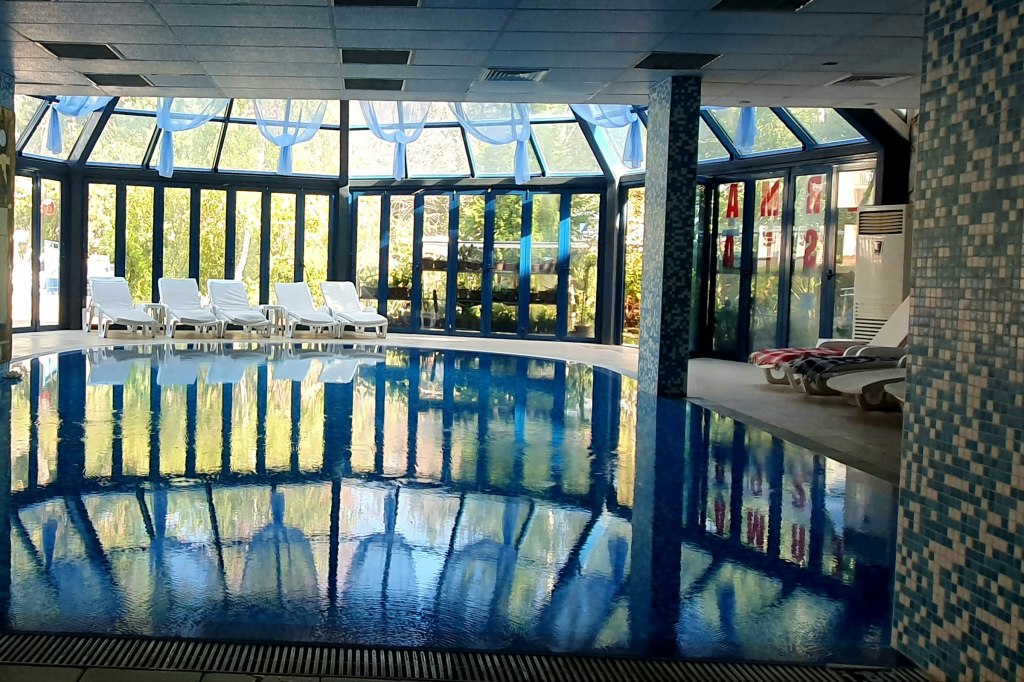
Long before the word wellness entered travel brochures, northern Portugal had its spring towns. In the hills of Trás-os-Montes, visitors came in the nineteenth century to take the waters, stroll under old trees and rest. Two of the loveliest thermal spas in Portugal, Vidago and Pedras Salgadas, carry that tradition forward with a light, contemporary touch, and both make a restful escape within easy driving distance of Porto.
Vidago Palace: Belle Époque Grandeur, Modern Calm
Vidago Palace was built in 1910 and inaugurated by King Manuel II, and in its day it was celebrated as one of the most luxurious hotels on the Iberian Peninsula. After a careful restoration with Álvaro Siza as lead designer, it reopened in October 2010. The setting is a centuries-old park of maples, pines and laurels, threaded with walking paths and home to natural mineral springs, and there’s a golf course among the trees.
The thermal spa, designed by Siza, is a study in restraint: straight lines, white marble and soft light. The hotel describes its water as drawn from deep wells in granite. Treatments include immersion baths in mineral water at around 36 to 42°C, hydromassage, jet and Vichy showers, and hydropinia, the traditional practice of drinking the water over a course of days under medical guidance. There’s also an outdoor vitality pool, an ice fountain and a relaxation room, plus facials in partnership with Clarins.
Pedras Salgadas: Cabins in the Pines
A short drive away, Pedras Salgadas Spa and Nature Park dates to the mid-nineteenth century, when Portuguese society came here to bathe and socialize. Its original 1875 Art Nouveau bathhouse was renovated by Siza in 2010 and offers spring-water treatments such as Vichy showers, a Turkish bath and massage.
The real charm is how you sleep. Architect Luís Rebelo de Andrade designed a series of Eco Houses, each laid out differently so they sit lightly among the existing pines, along with Tree Snake Houses raised about five meters above the ground and reached by suspended footbridges. Waking up at canopy height, with birdsong and the smell of resin, is its own quiet therapy.
What Research Says About Thermal Spas
Mineral-water bathing, often called balneotherapy, has a long history across Europe, and it has been studied. A 2017 review of double-blind randomized trials, most of them in people with conditions such as knee osteoarthritis or chronic low back pain, found that mineral water and mud treatments were associated with improvements in pain, function and quality of life compared with ordinary water or baseline. The authors were careful, though: the trials varied widely in design, and they concluded the evidence was not yet strong enough to establish cause and effect or to single out the role of specific minerals.
So a reasonable way to frame a spa stay is this. Warm water, unhurried time, walks in green space and good sleep can help many people feel rested and loosen everyday stiffness. Specific health claims for particular waters deserve a more cautious reading, and medically supervised programs such as hydropinia are best discussed with a doctor first.
Tips for a Restful Visit
- Stay at least two nights; spring towns reward slowing down rather than rushing between treatments.
- Keep hot baths short, as the spa’s own guidance suggests, and drink plain water before and after.
- If you are pregnant, have a heart condition or take regular medication, check with your clinician before hot-water treatments.
- Pack walking shoes. The parks are the heart of the experience, especially in the golden light of autumn.
- Book treatments when you reserve your room, since spa schedules fill up on weekends.
There’s something deeply reassuring about places that have been doing one gentle thing well for more than a century. In Vidago and Pedras Salgadas, the water, the trees and the long afternoons still do most of the work.
This article is general information, not medical advice; please consult a qualified clinician before starting any treatment.

