
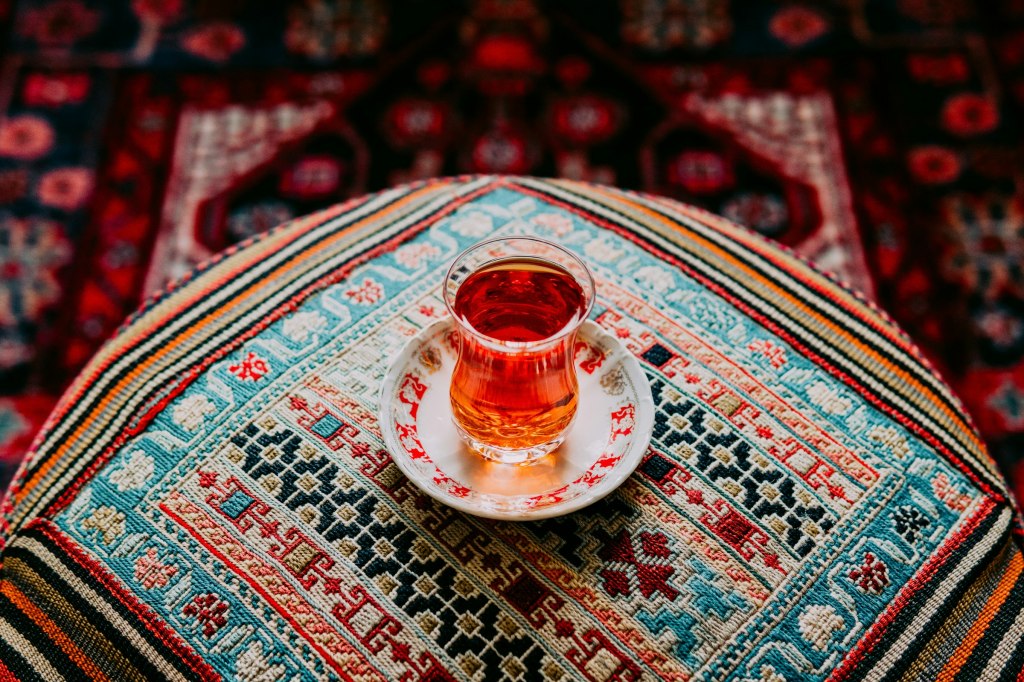
Azerbaijani tea culture asks very little of you: a seat, a little time, and a willingness to let the glass cool at its own pace. Across the country, from Baku’s Old City to the green hills of the south, black tea is poured into a slim, pear-shaped glass called an armudu and set down with small dishes of jam. In 2022, UNESCO inscribed the culture of çay, shared by Azerbaijan and Türkiye, on its Representative List of the Intangible Cultural Heritage of Humanity, describing it as a symbol of identity, hospitality and social interaction. For a traveler, it may be the most restorative ritual on the itinerary.
The Shape of the Armudu Glass
Armudu means “pear-shaped,” and the curve is more than decoration. Tradition holds that the narrow waist keeps the tea warm at the bottom while the wider rim cools the top for sipping. Glasses come in clear crystal, and you will also see porcelain, faience and silver versions. Hold it by the rim, not the belly, and you will look as though you have been doing it all your life.
Where the Leaves Grow
Azerbaijan grows its own tea. The main region is Lankaran-Astara in the humid south, near the Caspian coast, where the first experimental bushes were planted in the late 19th century and a tea factory followed in 1896. The northwestern districts of Zagatala and Balakan also grow tea. A drive south through terraced green rows is a lovely way to see where the glass in your hand begins.
Small Customs, Big Welcome
- Tea comes first. Serving tea at the start of a visit or a meal is a sign of hospitality, so accept the first glass with thanks.
- Sugar is dipped, not stirred. Many people dip a sugar cube into the tea and take a bite before sipping, or skip sugar altogether.
- Jam is part of the conversation. Small bowls of fig, strawberry, apricot, blackberry or even whole walnut preserves arrive alongside, eaten by the spoonful between sips.
- Lemon and spice are welcome. A slice of lemon, a stick of cinnamon or a sliver of ginger often finds its way into the pot.
- Tea marks life’s moments. Engagements, weddings and births are all honored with tea, which explains why it is never rushed.
Herbal Brews to Try
Beyond black tea, Azerbaijani kitchens keep a fragrant cupboard of herbs. Thyme gathered from mountain slopes is a favorite, and you may also be offered mint, dog rose (rosehip), hawthorn, saffron or ginger infusions. They are pleasant in the evening if you would rather keep caffeine to the morning. If you take medication, are pregnant or have a health condition, it is sensible to check with your clinician before trying unfamiliar herbal preparations.
What Research May Suggest
Scientists have studied tea for decades. Large observational studies have linked regular tea drinking with some markers of cardiovascular health, and tea contains plant compounds called polyphenols that researchers continue to explore. The honest picture is a cautious one: observational research shows associations, not cause and effect, and tea drinkers may differ from non-drinkers in many other ways. Black tea also contains caffeine, so the number of glasses you enjoy is worth matching to how well you sleep.
What feels clearer, and is perhaps the real gift, is the pause itself. Sitting with friends or strangers over a slow glass, without a screen or an agenda, is a form of rest that many of us rarely allow ourselves at home.
Tips for Enjoying the Ritual
- Let the glass rest a minute before the first sip; freshly poured tea is very hot.
- Try a traditional breakfast in Baku’s Old City, where tea, tandir bread, cheese and honey arrive together.
- Bring a few armudu glasses home in your carry-on, wrapped in a scarf.
- If you visit the tea region in the south, ask your hotel to arrange a plantation or factory visit in advance.
The armudu holds only a few mouthfuls, which is rather the point. Another glass will always be offered, and the conversation will always continue.
This article is general information, not medical advice; please consult a qualified clinician about your own health.

