
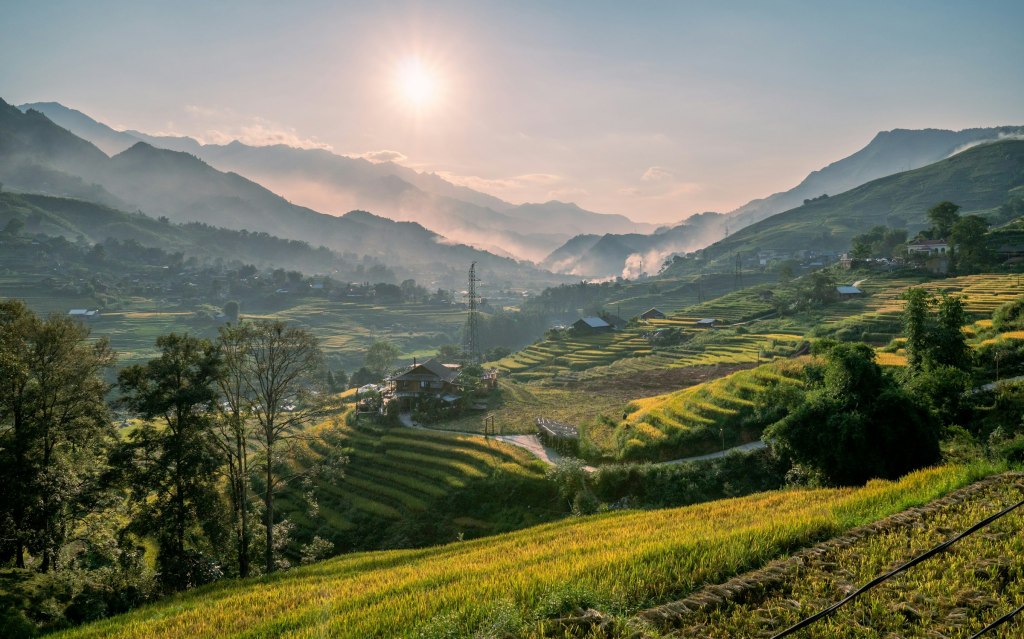
High in the mountains of northern Vietnam, where rice terraces fold down the valleys around Sapa, the Red Dao people have kept a bathing ritual for generations. Red Dao herbal baths are simple in form: a wooden tub, hot water steeped with forest plants, a small room filled with fragrant steam. Yet the experience feels anything but ordinary. For many travelers it becomes the most restful hour of a trip.
Here is what the tradition involves, where to try it, and what research on warm bathing can and cannot tell us.
An Old Recipe, Carefully Kept
Each Red Dao family keeps its own recipe, passed down from mother to daughter. A bath typically uses ten or more plants gathered from the hills, some of them rare, and the mix may include elderberry, Vietnamese balm, fig and wild pepper leaves, and cinnamon. The herbs are chopped, sun-dried and then simmered for hours over a fire until the liquid turns a deep wine red and smells sweet and woody. Just before bathing, lime leaves, star anise or orange peel may be added.
The tubs themselves are part of the pleasure. Many are handmade from po mu, a fragrant cypress, and the warm wood releases a soft, resinous scent into the steam.
What the Ritual Feels Like
You step into water kept at around 35°C, comfortably warm rather than scalding, in an enclosed room so the steam stays close. A soak usually lasts 15 to 25 minutes. Some bathers pour water over their shoulders with a wooden scoop or gently rub their skin with a cloth or a few leaves. Afterward, most people rest wrapped in a robe with a cup of warm tea, feeling heavy-limbed and quiet in the best possible way.
Where to Try Red Dao Herbal Baths
Several places offer the bath in thoughtful settings. As of this writing:
- Topas Riverside Lodge, in Nam Cang village near Sapa, sets its herbal baths above the Nam Cang River, and guests can watch a Red Dao woman gather and prepare the herbs.
- Sapa Napro, in Ta Phin village outside Sapa, offers tubs with wide views over the mountains.
- Dao’s Care in Hanoi works with Red Dao women from Sapa to offer herbal baths and Dao massage in the capital, a lovely option before or after a trip north.
For a longer stay, Topas Ecolodge, about 45 minutes uphill from Nam Cang, pairs mountain views with a heated saltwater infinity pool, morning yoga and its Rice Spa.
What the Research Suggests
The Red Dao bath has been studied very little in formal clinical research, so claims about specific herbs should be read as tradition rather than proven effect. What science can offer is a broader look at warm bathing.
The most widely cited work comes from Japan, where soaking in a deep tub is part of daily life. A study published in the journal Heart in 2020 followed more than 30,000 middle-aged adults for about 20 years and found that people who soaked in a hot bath almost every day had a lower rate of cardiovascular disease than those who bathed twice a week or less. It’s an encouraging finding, but it shows an association, not cause and effect. People who have time for a daily bath may differ in many other ways, and an accompanying editorial urged caution, noting that hot bathing may carry risks for older adults in particular.
Many people simply find warm water relaxing, and that alone has value. A quiet hour, gentle heat, fragrant steam and a cup of tea afterward can be a pleasant way to slow down, especially after a day of walking in the hills.
Tips for a Comfortable Soak
- Drink water before and after your bath, and avoid alcohol beforehand.
- Keep your first soak short, and step out whenever you feel too warm.
- Rise slowly at the end, since warm water can leave you lightheaded.
- If you are pregnant, have a heart condition, low or high blood pressure, or sensitive skin, check with your doctor before trying a hot herbal bath.
- Let the staff know about any plant allergies so they can advise you.
This article is general information, not medical advice; please consult a qualified clinician about your own health.

