
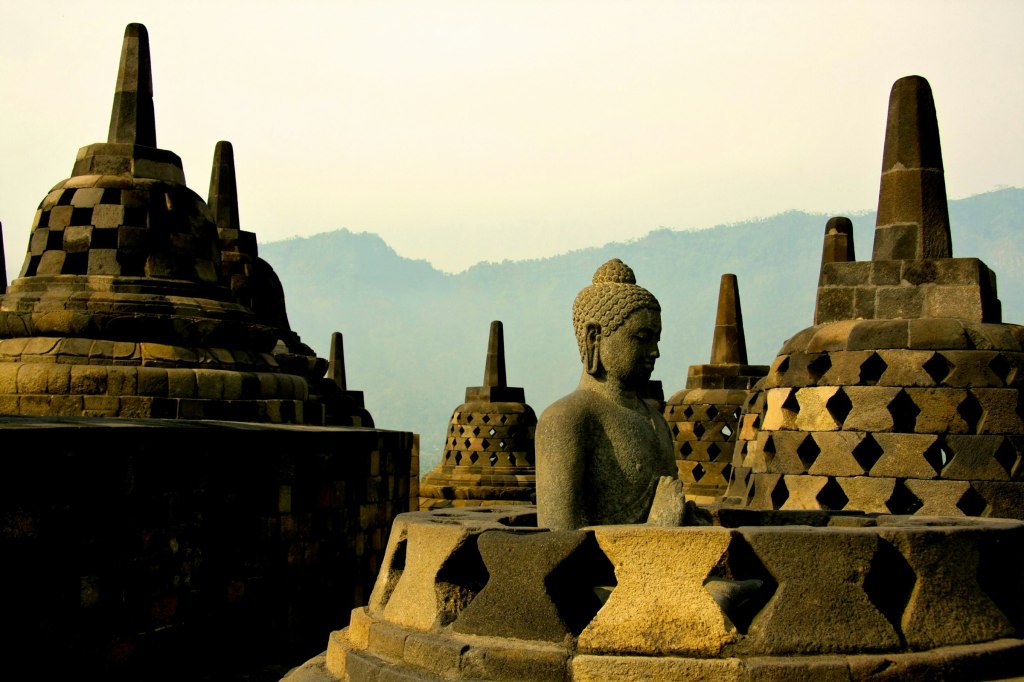
Borobudur and Prambanan sit within a morning’s drive of each other, one a Buddhist monument of volcanic stone, the other a soaring Hindu temple complex. Both date to the ninth century, and both were inscribed as UNESCO World Heritage sites in 1991. This two-day plan around Yogyakarta lets you see them at their best, at sunrise and in the golden hour, with room to breathe in between.
Day one: sunrise at Borobudur
Start early. Mist hangs over the Kedu Plain before dawn, and the volcanoes appear slowly, as if someone were lifting a curtain. Some travelers watch the sunrise from the hilltop viewpoint at Punthuk Setumbu, with Borobudur floating below. Others stay close to the temple. Aman’s Amanjiwo, at the foot of the Menoreh Hills, overlooks the monument and offers a sunrise experience with temple guides who explain the reliefs as the light reaches them.
Borobudur is built as a stepped mountain, and walking it clockwise through the galleries is a quiet kind of reading. The carved panels, numbering well into the thousands, unfold Buddhist teachings and scenes of daily life in ancient Java. Higher up, the stupas open onto a round summit with seated Buddhas in latticed domes. Access to the upper levels is managed through advance tickets, so arrange yours before you travel.
In the afternoon, visit Mendut and Pawon, two smaller temples that sit in a line with Borobudur. They’re calm, intimate and rarely rushed. Lunch can be a long, leisurely affair in a garden restaurant near the hills.
Day two: Prambanan and Yogyakarta
Prambanan is all vertical lines. Its tall central towers are dedicated to the Hindu trinity, with Shiva’s temple the largest, and carvings along the balustrades tell episodes of the Ramayana. Go in the morning for softer light, then return at dusk if your schedule allows. On certain evenings, an open-air stage nearby presents the Ramayana ballet, with dancers, gamelan and the temple towers glowing in the background. Check the performance calendar before you plan.
Back in Yogyakarta, spend the afternoon at the Kraton, the Sultan’s palace, where pavilions and courtyards reflect the living traditions of Javanese court life. Batik workshops nearby offer a chance to watch the wax-resist craft up close and take home something truly personal. Dine on Javanese classics, such as gudeg, a slow-cooked young jackfruit dish that’s something of a local signature.
Planning Borobudur and Prambanan well
Dry season, roughly May to September, brings the clearest mornings. Wear light, modest clothing for temple visits and carry a scarf. A private guide adds immense depth, and a driver makes the day easy.
Java pairs beautifully with an island chapter. Our guide to Ubud and Bali’s most considered hotels makes an elegant next stop, and travelers who love sacred architecture will also enjoy Dawn at Angkor.

