
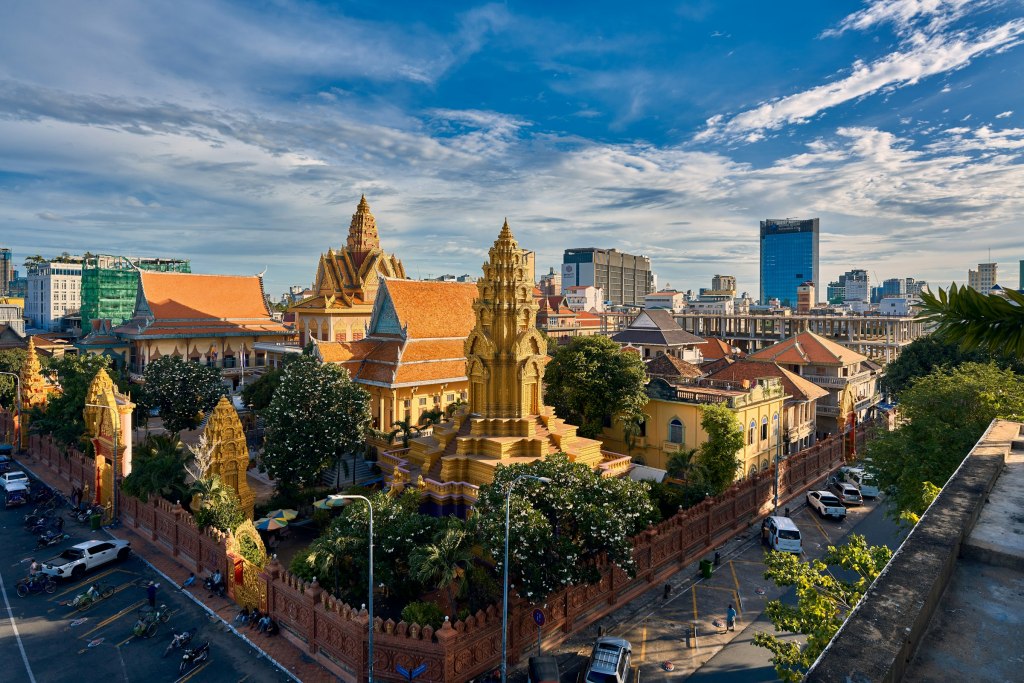
Forty-eight hours in Phnom Penh is enough to see Cambodia’s capital at its most graceful: a royal palace of gilded rooflines, a red-sandstone museum of Khmer sculpture, and a riverfront that glows at dusk. This two-day plan keeps the pace gentle, with space for long lunches and, if the calendar allows, an evening of classical dance.
Day One: 48 Hours in Phnom Penh Begins at the Palace
Start early at the Royal Palace on Samdech Sothearos Boulevard. Its neighbor, the Silver Pagoda, shares the same compound, so one visit covers both. Look for the Throne Hall and the Moonlight Pavilion, then step into the pagoda, where the Emerald Buddha is among the treasures. As of this writing the grounds open at 8 a.m. Wear something that covers shoulders and knees, as is customary at sacred sites.
After lunch, walk to the National Museum of Cambodia on Preah Ang Eng Street. The red-sandstone building opened in 1920 as the Musée Albert Sarraut, and its galleries hold more than 14,000 objects arranged from prehistoric times through the Angkor era and beyond. Seek out the sixth-century eight-armed Vishnu. Give it a slow two hours.
Evening belongs to Sisowath Quay, the riverside boulevard where the Tonle Sap meets the Mekong. Cafés, galleries and restaurants line the water. Choose a table with a view and let the light turn amber.
Day Two: Market Hall, Hilltop Temple and Dance
Central Market, known locally as Phsar Thmey, is a landmark in its own right. French architects completed it in 1937, and its great domed hall still draws shoppers for jewelry, silver, textiles and handicrafts. It opens daily from early morning. Bargaining is part of the custom, and it’s done with a smile.
Then climb to Wat Phnom, the hilltop temple that gave the city its name and a quiet place for offerings and reflection. In the afternoon, consider a Mekong river cruise from Sisowath Quay; the round trip takes roughly two and a half hours and shows the city from the water.
Save the evening for Khmer classical dance. The Royal Ballet of Cambodia was inscribed by UNESCO on its intangible heritage list in 2003, and its revival after 1979 is a story of devotion by surviving artists and teachers at institutions such as the Royal University of Fine Arts. Costumes echo the apsara figures carved at Angkor, and every gesture carries meaning. Performance venues and schedules change, so ask your hotel concierge or check the events page of Cambodian Living Arts before you go.
If Angkor is next on your route, our guide to Angkor, done slowly picks up where this itinerary leaves off. Opening hours and ticket arrangements can vary, so verify them locally a day ahead.

