
Forty-eight hours in Luxor is enough to stand among the columns of Karnak, descend into the royal tombs of the West Bank and watch the Nile turn gold from a historic hotel terrace. This plan keeps the mornings for the big sites, the afternoons for rest, and the evenings for the river.
Day one: the West Bank at its quietest
Start early. The light is soft, the stone is cool, and the Valley of the Kings feels closer to what its builders intended. A standard ticket covers three tombs, and the choices rotate from time to time to help preserve the paintings, so ask on arrival which are open. Tutankhamun’s tomb is ticketed separately. If it matters to you, plan for it.
From there, drive on to the Temple of Hatshepsut, built in terraces against the limestone cliffs. It’s one of the most elegant buildings in Egypt, all long ramps and clean lines, and it rewards an unhurried hour. On the road back toward the river, pause at the Colossi of Memnon. Two seated giants beside the road, no ticket, no queue.
Lunch is for shade and a long drink. Then rest. Luxor’s afternoons belong to the pool.
Dinner and a night at the Sofitel Winter Palace
If you’re choosing where to stay in Luxor, the Sofitel Winter Palace is the classic answer. The hotel opened in 1907, on a site whose original building is said to date back to 1886, and it sits on the banks of the Nile among tropical gardens. Its guest book is a history lesson: Howard Carter used the hotel to share news of the 1922 discovery of Tutankhamun’s tomb, and Agatha Christie and Winston Churchill are among those who stayed. Take a table on the terrace at dusk and let the river do the rest.
Day two: Karnak and Luxor Temple
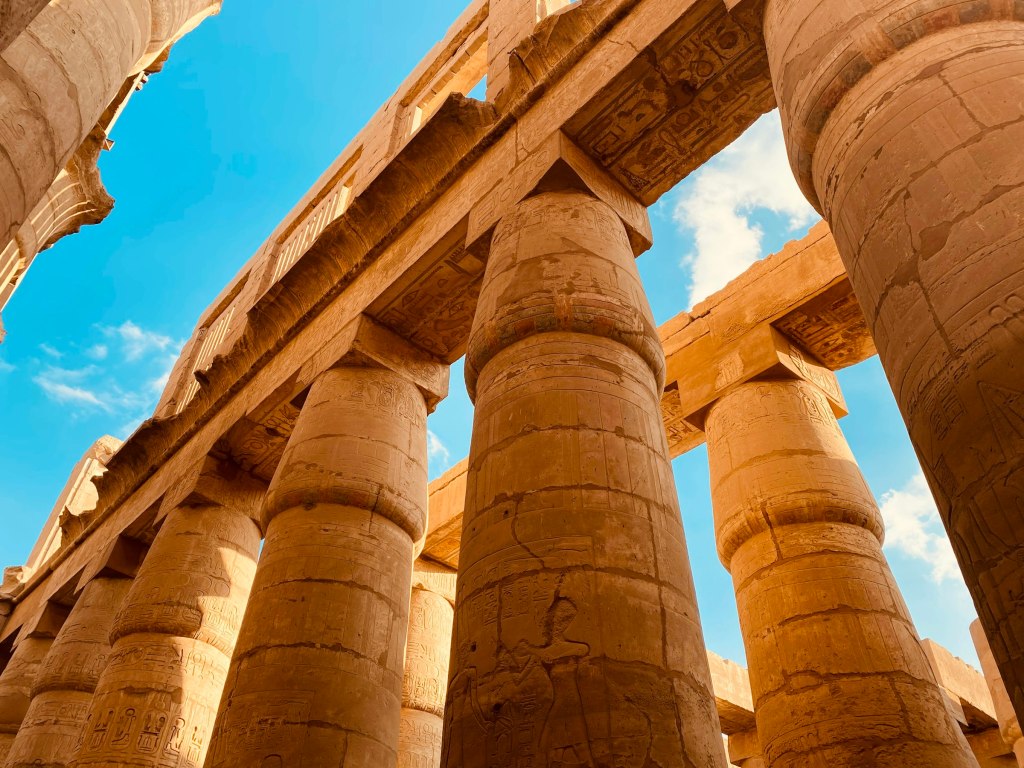
Begin the second day on the East Bank at Karnak. It isn’t one temple but many, built and expanded over more than two thousand years, with courtyards, obelisks and a forest of towering columns. Give it a full morning. Walk slowly, look up often, and notice how the carved reliefs catch the light as the sun moves.
Luxor Temple waits in the center of the city, and it’s best late in the day. Linked to the coronations of pharaohs, it was later used as a church and then a mosque, which means the site holds layers of history in a very compact space. Evening is when it glows.
Two optional additions
- A sunrise hot air balloon flight over the West Bank, with views of the Temple of Hatshepsut, the Colossi of Memnon and the Valley of the Kings. The flight lasts roughly 45 minutes, and the day starts well before dawn.
- A felucca sail on the Nile in the late afternoon, the traditional way to cross the river and the gentlest way to end a day of temples.
A last practical thought for this 48 hours in Luxor: pack a hat, carry water, and keep your itinerary loose. The temples are best met without a stopwatch. For a wider view of the country, our guide to the Grand Egyptian Museum beside the Pyramids of Giza pairs well with a stay on the Nile.

