
The Moderne Archive: At the Edge of the Counter
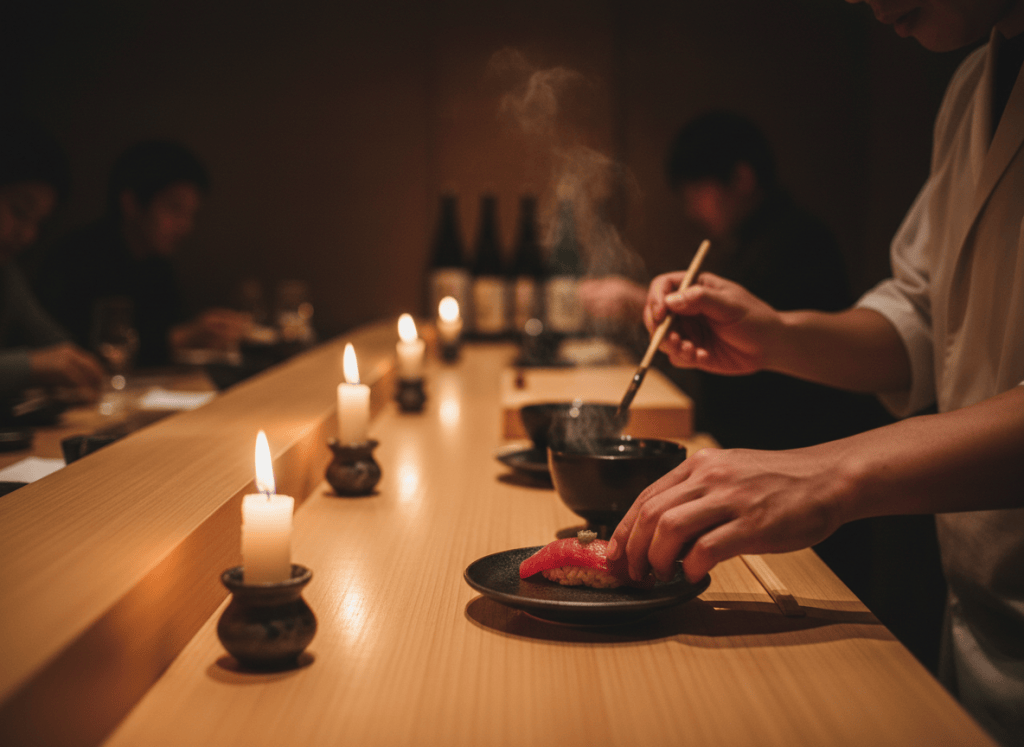
The door is unmarked, of course. A soft click, a hush of cool air, and you are inside a room calibrated to a single, precise mood. Twelve seats, no more. Cedar, stone, and shadow. The kind of light that makes conversation lower its voice.
In the world’s most coveted omakase rooms, dinner is not a booking; it is an appointment with obsession. The chef stands inches away, an archivist of tides and seasons, reading the day’s catch like a private manuscript. Knives move without flourish, only consequence. A thumb brushes rice into exacting symmetry; a single drop of aged soy lands with the weight of a signature.
Here, time is portioned into courses. Fatty tuna that tastes of first snow. Sea urchin so cold and sweet it rearranges your idea of the ocean. A broth poured in silence, steam carrying notes of smoke and citrus and something you cannot name. There is no menu to photograph, no spectacle to post, only the choreography of trust: you surrender, the chef remembers.
Outside, the city keeps its pace. Inside, the world narrows to the distance between your plate and the cutting board’s edge. The evening ends the way it began: a nod, a closed door, and the sense that you have been admitted, briefly, into a rarified archive of taste.


Leave a comment