
The United Arab Emirates is often described in superlatives, yet its quieter cultural side is where the real depth lies. Beyond the towers and the headlines, there is a country that has begun to think carefully about memory, craft and the long view, and it rewards the traveler who arrives with patience and curiosity.
Over a long weekend, two cities offer very different answers to the same question: what should a modern capital preserve, and what should it imagine? Abu Dhabi responds with stillness and civic grandeur, Dubai with a vibrant, creative energy. Seen together, they make a quietly absorbing conversation.
Abu Dhabi: the museum of light
Louvre Abu Dhabi, designed by Jean Nouvel and opened in 2017, rests beneath a vast perforated dome that scatters sunlight into a drifting pattern the architect called a rain of light. Walk beneath it and the temperature seems to soften, the shadows moving slowly across white stone and still water as the hours turn.
Inside, galleries trace shared human stories across civilizations, so the experience is as much about conversation between objects as about individual masterpieces. Arrive in the late afternoon, when the light under the dome is at its most theatrical, and leave time to sit by the water without any plan at all.
A second stillness at the mosque
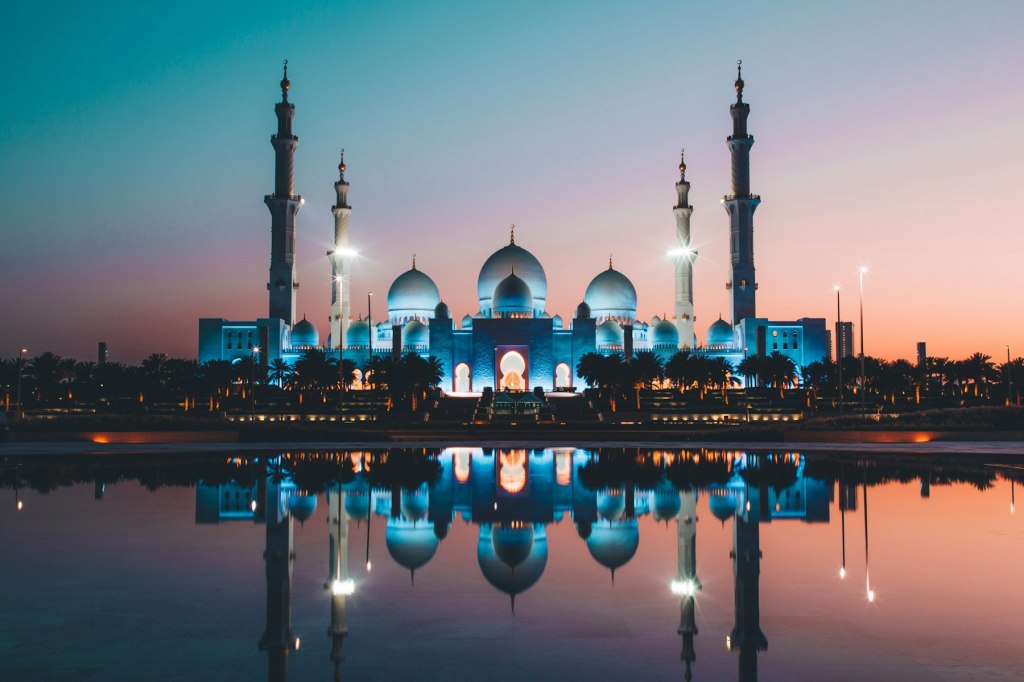
Nearby, the Sheikh Zayed Grand Mosque offers a different kind of stillness, its white marble courtyards best seen at dusk. As the sky deepens, the stone takes on a pearl-like glow, and the reflecting pools double the colonnades in quiet symmetry.
Dress modestly and allow time simply to walk. The scale is generous, the pace unhurried, and the experience rewards those who choose to listen to the hush.
Dubai: the gallery district
Alserkal Avenue, a cluster of converted warehouses in Al Quoz, is the center of the city’s contemporary art scene, with galleries, independent cinema and design studios beside specialty coffee. The industrial bones of the buildings, with their high ceilings and clean concrete, give the work room to breathe.
Spend a slow afternoon here before dinner downtown. Move gallery by gallery, pause for a cup of coffee in a courtyard, and let curiosity set the route. By evening, the contrast with the glittering skyline will feel entirely deliberate.
Where to stay
In Abu Dhabi, Emirates Palace Mandarin Oriental remains the grand, gilded option, set on its own stretch of beach. Its marble halls, soaring domes and attentive service suit those who appreciate ceremony, and the shoreline offers a calm counterpoint to the formality indoors.
In Dubai, choose a hotel on the Creek or in the old quarter if you want proximity to the city’s history alongside its skyline. There, wooden abras glide across the water, the call to prayer carries over the rooftops, and the city feels briefly like the trading port it once was.
How to go
The drive between the two cities takes roughly ninety minutes, so a private car makes the weekend effortless. Arrange a driver in advance, ideally through your hotel concierge, so that the journey becomes a graceful part of the weekend.
Go between November and March, when the weather is at its kindest and evenings invite lingering outdoors. Three nights is the ideal length, allowing one unhurried day for each city and a gentle day between. The weekend suits couples, close friends or a thoughtful solo traveler, and it is best booked early for the cooler months, when the finest rooms are first to be taken.
Leave with one or two places seen well. In the UAE, as in all good travel, the memory that lasts is rarely the largest. It is the light on pale stone, the quiet of a courtyard at dusk, and the sense of a country imagining its own future with grace.


Leave a Reply